South Asian Cooking Has Always Had a Calendar. Here's How to Read It.
There's a reason your grandmother made that particular spinach dish in winter and that particular sour tamarind curry when the rains came. It wasn't nostalgia or habit — it was the land telling her what to cook. South Asian food has always been deeply, almost stubbornly seasonal. The monsoon didn't just water the fields. It wrote the menu.
For cooks in the US, that connection can feel abstract. You're shopping at a Kroger or H-E-B where tomatoes look the same in January as they do in August, and methi bunches show up whenever the Indian grocery decides to stock them. But the underlying logic of South Asian seasonal cooking is still worth understanding — because once you get it, your cooking changes. You stop reaching for the same five dishes year-round and start cooking with a rhythm that actually makes sense.
What the Monsoon Actually Did to a Kitchen
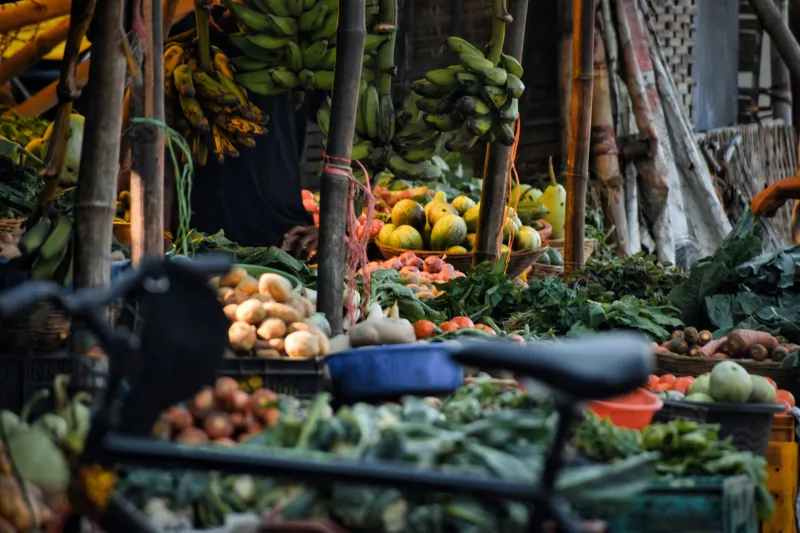
Across South Asia, the monsoon season — roughly June through September depending on the region — wasn't just a weather event. It was a culinary reset. Markets flooded with certain vegetables: ridge gourd, bottle gourd, bitter melon, taro, and all manner of leafy greens that thrived in the wet heat. Heavier proteins were used more sparingly. Dishes leaned lighter, more digestive-friendly, often built around ginger, cumin, and asafoetida — spices traditionally believed to support digestion during a season when the body runs hotter and humidity makes everything feel like too much.
In coastal regions like Kerala and parts of Maharashtra, the monsoon also meant the start of fishing bans and rough seas, so dried fish and preserved ingredients stepped in where fresh wouldn't. Preservation techniques — pickling, sun-drying, fermenting — weren't just practical. They were how monsoon kitchens kept themselves fed and interesting through weeks of relentless rain.
The post-monsoon harvest, by contrast, brought abundance. Root vegetables, winter squash, fresh turmeric, and a wave of legumes that had been growing through the wet months. This is the season that gave us a lot of the richer, slower-cooked dishes — the ones that feel like they belong on a Sunday afternoon.
Winter Cooking Thinks Differently
North Indian winters are legitimately cold, and the food reflects that. Sarson ka saag — mustard greens slow-cooked into something silky and almost sweet — is a winter dish not because someone decided it was, but because mustard greens peak in the cool months. Makki ki roti, the cornmeal flatbread that goes with it, comes from the same harvest logic. Gajar ka halwa, that slow-cooked carrot dessert that shows up at every winter wedding, exists because Delhi carrots are sweetest and most intensely flavored in January and February.
The spicing in winter cooking tends to run warmer too. More dry ginger, more black pepper, more of the spices that generate internal heat — not because someone wrote a rule about it, but because generations of cooks noticed that certain flavors felt right when the temperature dropped.
The Summer Equation
Summer across the subcontinent is brutal in a way that most American summers aren't, except maybe in Phoenix or Houston. The cooking that emerged from those conditions is genuinely clever. Raw mango — tart, cooling, and intensely flavored — shows up everywhere: in drinks like aam panna, in chutneys, in rice dishes. Yogurt-based preparations multiply. Chaas (thin spiced buttermilk) and raita become daily fixtures, not sides.
Vegetables that hold up to heat and cook quickly dominate. Dishes get simpler, because standing over a stove when it's 105 degrees outside is not something anyone does voluntarily. This is also the season of overnight-soaked preparations — dishes that do their work while you sleep so you're not cooking in the worst heat of the day.
Translating All of This to an American Grocery Run
Here's where diaspora cooking gets genuinely interesting. You're not in Punjab in January or coastal Andhra in monsoon season. You're in a suburb of Chicago or Atlanta, and the seasonal logic needs to be rebuilt with what's actually available.
The good news is that American produce seasons aren't so different that the framework breaks down entirely. A few loose translations that actually work:
Spring and early summer is when you'll find good bitter melon at South Asian and Asian grocery stores, along with fresh fenugreek leaves and long beans. This is the time to cook the lighter, more bitter-edged dishes that those ingredients call for.
Late summer brings the best tomatoes, which matters more than people realize. A lot of South Asian curries are built on tomato bases, and a farmers market tomato in August will do something for your masala that a February supermarket tomato simply cannot.
Fall is your window for mustard greens, which do show up at regular grocery stores and at farmers markets. It's also when winter squash peaks — and if you've never made a South Asian-spiced squash preparation, you're missing something.
Winter is dried and preserved ingredient season. This is the time to lean on your pantry, make the slow-cooked dals and halwas, and appreciate why your grandmother spent all summer making achar.
The Part That Doesn't Translate Perfectly
Some things are just harder to replicate. The specific bitterness of monsoon-season karela, the sweetness of a Lahori carrot in January, the particular sourness of raw green mango from a tree in someone's backyard — these are flavors that exist in a specific place and time. You can get close. You can make good versions of these dishes with what's available. But there's a reason diaspora cooks often describe their food as tasting almost right, like a song in a slightly different key.
That gap isn't a failure. It's actually useful information about what you're cooking and why. When you know that sarson ka saag is a winter dish tied to a specific harvest, you stop expecting it to taste the same in July with grocery store mustard greens. You adjust your expectations, and sometimes your technique, accordingly.
Cooking With the Calendar, Not Against It
The practical takeaway isn't that you need to map your cooking onto South Asian harvest seasons you've never experienced. It's that paying attention to what's actually good right now — in your market, in your region, in this month — is exactly what South Asian cooking has always asked cooks to do.
The monsoon effect isn't just about rain. It's about the idea that good cooking is responsive. It listens to what's available, what feels right for the weather, what the body seems to want when it's cold or hot or somewhere in between. That instinct doesn't require a specific geography. It just requires paying attention.
Your grandmother knew what to cook because the season told her. You can learn to hear the same thing. It just sounds a little different here.