Cooking From Memory: How Diaspora Kitchens Keep Recipes Alive Without a Single Written Word
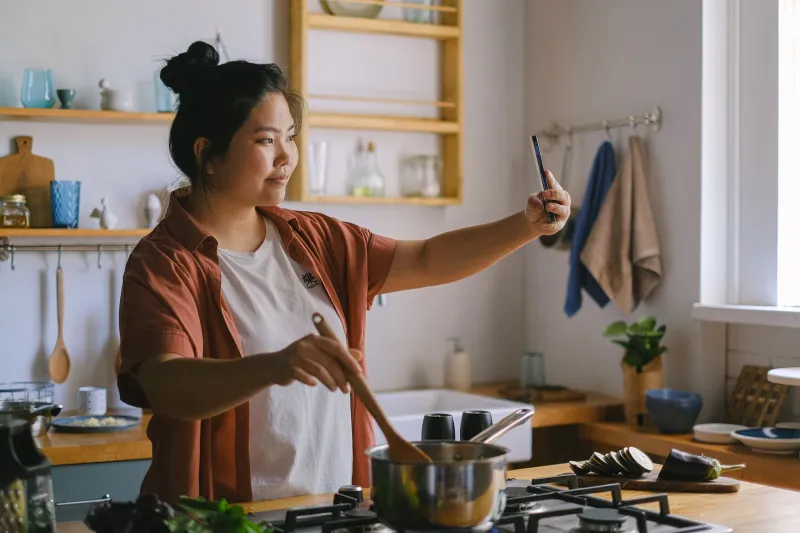
There's a specific kind of panic that hits when you're standing in your Chicago apartment, holding a half-empty bag of toor dal, trying to remember whether your mom's dal tadka smelled more like cumin or more like mustard seed. You weren't paying attention when you should have been. Nobody ever is. And now she's in Hyderabad, it's a Sunday evening, and you are on your own.
This is the quiet inheritance of the diaspora kitchen: not a recipe box, not a handwritten card tucked into a cookbook, but a collection of sensory impressions — the color of a curry at the right moment, the sound of tempering oil, the exact shade of golden that means your onions are ready. South Asian home cooks across the US are working from this kind of archive every single day, and the food they produce is something remarkable: imperfect, alive, and deeply personal.
The Recipe That Lives in Your Body
Ask most South Asian home cooks in America where they learned to make their signature dish, and you'll get some version of the same answer: I just watched. For generations, South Asian culinary knowledge has passed not through written instruction but through proximity. You stood at the stove next to someone who knew what they were doing. You absorbed it — the rhythm of their stirring, the casual way they tossed in spices without measuring, the moment they tilted their head and decided the masala was done.
The problem is that watching and doing are very different things. You can spend years watching someone cook and still feel completely lost the first time you try it alone. The knowledge lives in their hands, not yours. Not yet.
So diaspora cooks improvise. They call their moms mid-recipe and describe what they're seeing. They text photos of their dal with captions like does this look right? They taste and adjust, taste and adjust, chasing a memory that shifts a little every time they reach for it.
Substitution as Interpretation
Reconstruction gets even more complicated when the ingredients aren't quite right. Your mom used a specific variety of dried red chili she bought from a shop in their neighborhood back home. You're working with what's available at your nearest Indian grocery, and it's close, but not the same. The curry leaves in the freezer section don't have the same volatile punch as fresh ones. The yogurt from the regular grocery store is thicker and tangier than what she used.
Here's the thing: this is not failure. This is interpretation.
Every cook who has ever tried to recreate a dish across a geographic and cultural gap has had to make these calls. You don't have the exact ingredients, so you work with what you have and you compensate. You add a little more of this, pull back on that, lean into a different spice to approximate a flavor your palate remembers even if your pantry can't replicate it.
In a very real sense, this is how cuisines evolve. The recipes that traveled with South Asian immigrants to the UK, to Canada, to the US didn't stay frozen in time — they adapted to available ingredients and local contexts, and those adaptations became their own traditions. Your version of your mother's dish is already becoming something distinct. That's not a corruption of the original. That's how food stays alive.
The Conversation Happening Across Continents
Technology has changed the reconstruction process in ways that would have seemed almost magical to earlier generations of immigrants. Video calls mean you can actually show your aunt in Lahore what your karahi looks like right now, and she can tell you it needs more tomato. WhatsApp voice messages carry instructions across time zones in real time. Some families have started recording these calls — not formally, just leaving the phone propped up while grandma walks you through a recipe, creating an accidental archive.
Food content creators in the South Asian diaspora have also become an unexpected resource. When you can't call home, or when the person who knew the recipe is no longer around, sometimes a YouTube video by someone who grew up eating the same food in the same regional tradition can fill in enough gaps to get you started. It's not the same as standing next to your mom. But it's something.
What's striking about these exchanges — the phone calls, the videos, the community forum posts asking does anyone know how to make the Sindhi version of this? — is how collaborative they are. The diaspora kitchen is not a solitary place. It's a network of people all trying to hold onto the same slippery, delicious thing.
When the Reconstruction Becomes Its Own Recipe
At some point, something interesting happens. You've made your version of your mother's dal enough times that it starts to feel like your dal. You've adjusted it, corrected it, leaned into the parts you love and quietly dropped the parts you could never quite get right. You've added a finishing squeeze of lemon because you like the brightness. You've been heavier with the ghee than she ever was.
Your kids, if you have them, are watching you make this dish. They are learning your version. They will someday stand in their own kitchens trying to remember whether it smelled more like cumin or more like mustard seed.
This is the chain. It has never been about perfect replication. It has always been about transmission — passing something forward that carries the spirit of what came before, even as it changes shape in every new pair of hands.
Practical Notes for Cooks Working From Memory
If you're actively trying to reconstruct a recipe you only half-remember, a few approaches can help:
Start with the aromatics. The base of most South Asian dishes — the combination of onion, ginger, garlic, and whole spices hitting hot oil — is where the foundational flavor lives. Getting that right puts you closer to the finish line than any single other step.
Work in layers and taste constantly. Memory-based cooking requires you to check in with your senses at every stage. Don't wait until the dish is done to see if it's tracking. Taste the masala before you add liquid. Taste the dal before you add the tadka.
Write it down this time. When you get close to the thing you were chasing — when you taste a spoonful and feel that small shock of recognition — stop and document what you did. Quantities, order of operations, timing. Future you will be grateful.
Ask the questions now. If the person who taught you this food is still reachable, call them. Ask the specific questions. What kind of chili? How much fenugreek? How long do the onions really need? These conversations are worth having while you still can.
The spice drawer is many things: a pantry resource, a cooking tool, a window into regional tradition. But for diaspora cooks working from memory, it's also something more personal than that. It's the place where the past and the present meet, imperfectly and generously, one pinch at a time.