Your Yogurt Keeps Failing Because You're Trusting a Packet Instead of Your Kitchen
There's a particular kind of kitchen frustration that hits different — the kind where you did everything right, followed every step, and still ended up with something that looks like warm milk wearing a costume. Homemade yogurt is famous for producing exactly this feeling. You heat the milk, you cool it down, you add your starter, you wrap the whole thing in a dish towel like you're swaddling a baby, and eight hours later you get... soup.
Here's the thing nobody tells you: the problem probably started at the store, not in your kitchen.
What's Actually in That Packet
Commercial yogurt starter cultures — the kind sold in little foil packets at Whole Foods or ordered from a cheesemaking website — are designed for consistency and shelf stability, not for the kind of living, adaptable fermentation that South Asian home kitchens have been running for centuries. These cultures are typically freeze-dried, which means the bacteria inside are technically alive but deeply dormant. They need to be coaxed back into activity, and they don't always cooperate.
More importantly, most commercial starters are built around just two or three bacterial strains — usually Lactobacillus bulgaricus and Streptococcus thermophilus. That's a narrow team. They work in controlled conditions. Change the humidity, the ambient temperature of your apartment, the fat content of your milk, or even the mineral composition of your tap water, and the whole operation can fall apart.
South Asian yogurt — dahi — has never been made this way. It's been made with a spoonful of yesterday's yogurt, which contains a whole ecosystem of bacteria that has been adapting to your specific kitchen, your specific milk, and your specific climate for as long as you've been making it.
The Living Starter: Why a Spoonful of Dahi Changes Everything
When your grandmother made yogurt, she wasn't starting from scratch. She was continuing a chain. The bit of dahi she stirred into warm milk carried bacteria that had been passed through dozens, maybe hundreds of batches. Those cultures had evolved to thrive in her conditions — the temperature range of her home, the milk she used, the vessel she preferred.
This is what food scientists sometimes call a "heirloom" or "backslopped" culture, and it's genuinely more robust than anything that came out of a packet. The microbial diversity in a well-maintained dahi starter means there are multiple strains working together, covering for each other when conditions aren't perfect. If one strain struggles because your kitchen is a little cool, another picks up the slack.
The practical upshot: if you can get a spoonful of dahi from someone who makes it regularly — a neighbor, a family member, a friend from the South Asian community — that starter will outperform a commercial packet almost every single time. Use it within a day or two, keep the chain going, and you'll have a living culture that gets better the more you use it.
Temperature Is the Variable You're Probably Getting Wrong
Assuming you have a good starter, the next place things go sideways is temperature. Dahi wants warmth — not scorching, not lukewarm, but a steady, gentle heat that holds between about 100°F and 110°F. Commercial starters often have their own preferred ranges printed on the packet, but heirloom cultures are a little more forgiving once they're active.
The challenge in most American homes is maintaining that temperature passively. Your oven with just the light on can work. Wrapping the jar in a thick towel and tucking it inside a turned-off microwave works. An Instant Pot on the yogurt setting technically works, but here's where it gets interesting.
Why the Clay Pot Isn't Just Nostalgia
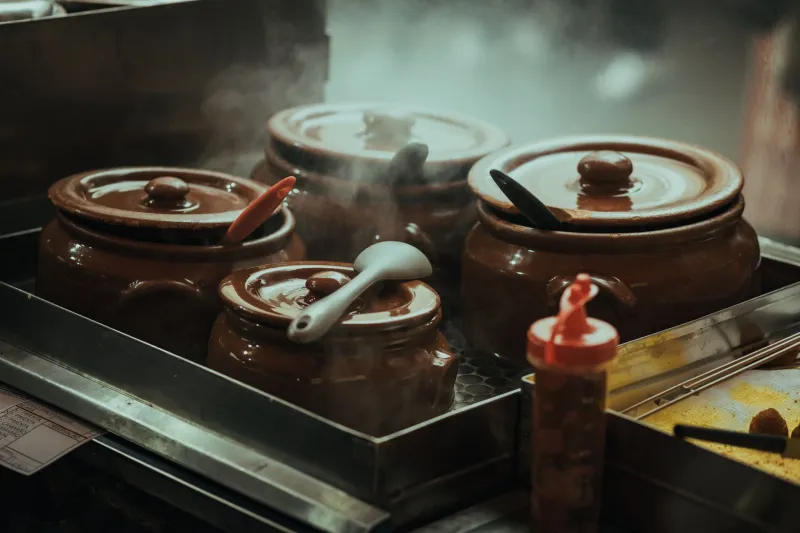
A lot of South Asian households — particularly in South India, Pakistan, and Bangladesh — have traditionally set yogurt in unglazed clay pots, and this isn't just an aesthetic choice. Clay is porous. As the yogurt sets, a small amount of moisture evaporates through the walls of the pot, which slightly cools the outer layer and creates a gentle, natural temperature gradient. The result is a yogurt that's often firmer, less watery, and more complex in flavor than what you get from a sealed glass jar or a stainless steel insert.
The Instant Pot is convenient, and it'll make perfectly acceptable yogurt. But "perfectly acceptable" and "the yogurt your grandmother made" are not the same thing. If you want the texture that people mean when they talk about real dahi — that thick, slightly tangy, spoonable consistency that holds its shape — a clay pot placed in a warm corner of your kitchen will get you closer than most appliances.
You can find unglazed clay yogurt pots at South Asian grocery stores or online. They're inexpensive and worth trying at least once.
Getting the Milk Right
One more variable that doesn't get enough attention: the milk itself. Full-fat whole milk gives you richer, firmer yogurt. If you're using 2% or skim, you're already fighting an uphill battle. Some traditional methods call for heating the milk until it reduces slightly — maybe by ten or fifteen percent — which concentrates the proteins and results in a thicker set without any additives.
Raw milk, if you have access to it and are comfortable using it, can produce remarkable dahi because it carries its own native bacteria that work alongside your starter. That said, pasteurized whole milk from a good dairy works beautifully, and it's what most of us are working with.
One thing to avoid: ultra-pasteurized milk, which is increasingly common in the US (look for "UHT" on the label). The high-heat processing that extends its shelf life also damages the proteins in ways that make it significantly harder to set into yogurt. It's not impossible, but it's frustrating. Stick to regular pasteurized milk.
Keeping the Chain Alive
Once you've made a successful batch, the most important thing you can do is save a spoonful before you eat it all. That spoonful is your next starter. Keep it in a small jar in the fridge, use it within a week, and repeat. The culture will settle into your kitchen over time, and your yogurt will get more consistent — and more distinctly yours — with every batch.
This is exactly what South Asian home cooks have always known: the best yogurt isn't made from a packet you bought at a specialty store. It's made from the yogurt you already have. The starter is the recipe. Everything else is just milk and patience.