Pound It, Blitz It, or Just Give Up: Choosing the Right Spice Grinder for How You Actually Cook
Let's get one thing out of the way: there is no universally correct way to grind spices. Anyone who tells you otherwise has either never cooked under a time crunch or has never watched their mom reduce a batch of whole coriander to powder in under two minutes with a stone grinder that predates most appliances in the kitchen. Both of those people exist, and both of them are right — for their own situations.
But tool choice in South Asian cooking isn't purely philosophical. The method you use to break down whole spices has a measurable effect on flavor, texture, and the overall character of a dish. So before you commit to one approach (or feel guilty about the approach you've already committed to), here's what's actually happening when you grind.
What Grinding Actually Does to a Spice
Whole spices are essentially tiny locked vaults. The essential oils, aromatic compounds, and flavor molecules are protected inside cell walls and husks. When you grind, you're breaking those cells open and releasing everything inside.
The method of grinding changes how those cells break — and that matters more than most people realize.
Crushing and pounding, like you'd do in a mortar and pestle, ruptures cell walls more slowly and unevenly. This creates a coarser, more varied texture, but it also generates less heat in the process. Heat is the enemy of volatile aromatic compounds — the stuff that makes your kitchen smell incredible. A slower, cooler grind preserves more of those compounds.
Electric blade grinders work fast. That speed generates friction, which generates heat. For dry, hard spices like cumin or coriander, this isn't a disaster. But for something more delicate — cardamom, fresh curry leaves, or anything with a high moisture content — the heat can dull the top notes before they ever hit the pan.
The Case for the Mortar and Pestle
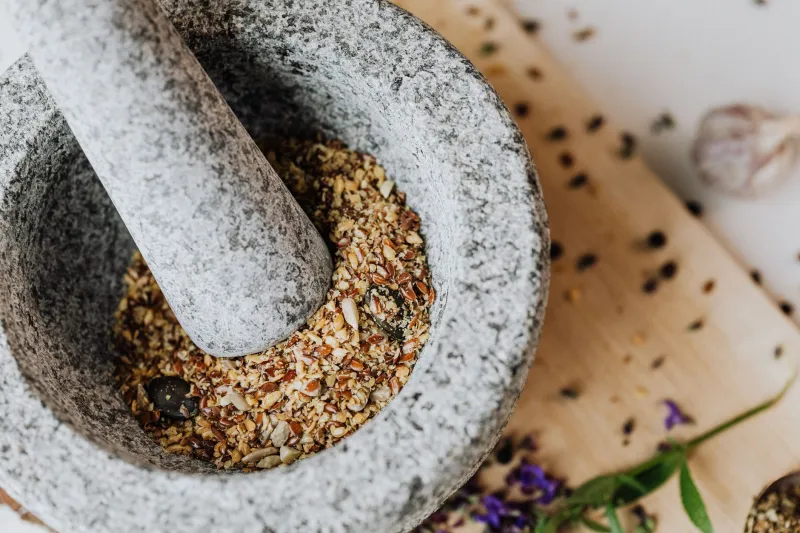
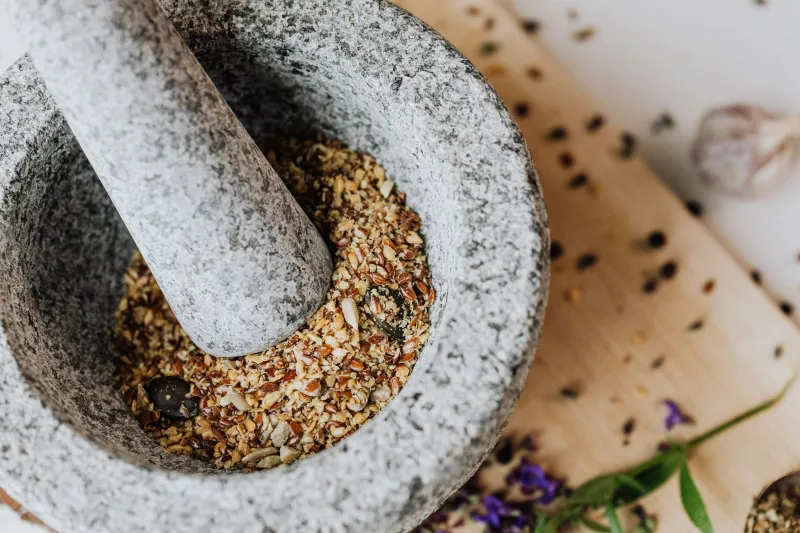
Across South Asia, the mortar and pestle shows up in dozens of forms: the heavy granite ammi kallu of Tamil Nadu, the squat stone sil batta used across North India, the wooden ulookhala found in Bengali kitchens. In the US, you'll most often find granite or marble versions at Indian grocery stores or online, and they're worth every penny of counter space they demand.
What a good stone mortar does well: wet pastes. If you're making a fresh coconut chutney, a ginger-garlic paste with actual texture, or a green masala where you want the aromatics to stay bright and slightly chunky, nothing beats a mortar. The irregular crushing action creates a paste with more surface area and complexity than anything a blender produces.
The honest downside? It takes time and effort. Grinding a tablespoon of whole cumin by hand takes maybe thirty seconds. Grinding enough spice for a large pot of biryani is a workout. And if you've got wrist or joint issues, a heavy mortar becomes less of a kitchen tool and more of a liability.
For daily cooking in an American home kitchen — where you might be making dinner after a full workday — the mortar is often best reserved for specific tasks rather than all-purpose grinding.
The Case for the Electric Grinder
The dedicated electric blade spice grinder (the kind that looks like a small coffee grinder — because it is, essentially, a small coffee grinder) is probably the most practical tool for most US-based South Asian home cooks. A decent one runs between $20 and $40, fits in a cabinet, and can reduce a cup of whole spices to powder in under a minute.
For dry spice blends — your garam masala, your chaat masala, your custom curry powder — an electric grinder is genuinely hard to beat. You can toast whole spices in a pan, let them cool, and then blitz them in thirty seconds. The result is fresher than anything you'll buy pre-ground.
The caveats are real, though. Blade grinders don't grind evenly. You get a mix of fine powder and slightly larger pieces, which can mean uneven cooking in the pot. Shaking the grinder mid-process and pulsing rather than running it continuously helps, but it's still not as consistent as a burr grinder.
Also: clean your grinder between uses. Cardamom residue in your cumin is not the fusion flavor you were going for.
For cooks who make large batches of spice blends, a higher-end burr-style electric grinder (common in coffee circles) offers more consistency, though they run $100 and up. If you're grinding spices in volume, the investment pays off.
The Blender Situation
Many South Asian home cooks — especially those who grew up watching their parents use a mixie, the countertop wet-dry blender common across India and Sri Lanka — reach for a high-powered blender for both wet and dry grinding. In the US, a Vitamix or a Blendtec can replicate a lot of what a mixie does, though the jar sizes are usually larger than ideal for small spice batches.
For wet grinding — soaked rice and lentils for dosa batter, fresh coconut, soaked dal for vada — a powerful blender is arguably the best tool available outside of an actual wet grinder (the countertop stone-drum appliances popular in South Indian households). If you're making dosa at home with any regularity, a wet grinder is worth looking into. They run $150–$300 and are available through Indian grocery stores and Amazon.
For dry spices in a blender: it works, but the large jar means small quantities don't grind well. You end up scraping a lot off the sides.
So Which One Should You Actually Buy?
Here's the honest answer, broken down by cooking situation:
If you cook South Asian food a few times a week and want fresh-ground spices with minimal effort: Get a dedicated electric blade grinder. Keep it just for spices. Spend $25 and don't overthink it.
If you make a lot of chutneys, fresh pastes, or wet masalas: A medium-sized granite mortar and pestle (at least 2–3 cups capacity) is worth adding to your counter. Use it specifically for wet work and fresh aromatics.
If you make dosa, idli, or other fermented batters regularly: A wet grinder is a legitimate long-term investment. Your batter will be noticeably better.
If you're just getting started and want one tool: The electric grinder wins on practicality. You can always add a mortar later.
If your grandmother is coming to visit: Clear a space for her to bring her own stone. Some things are non-negotiable.
The Part Nobody Talks About
The real variable in all of this isn't the tool — it's the spice itself. Fresh, properly stored whole spices ground in a cheap blade grinder will outperform stale whole spices ground in the fanciest equipment money can buy. Before you spend another dollar on equipment, open your spice jars and take a real inventory.
The grinder matters. But the spice matters more.