Same Pressure, Different Soul: What Gets Lost (and Gained) When You Swap the Stovetop Cooker for an Instant Pot
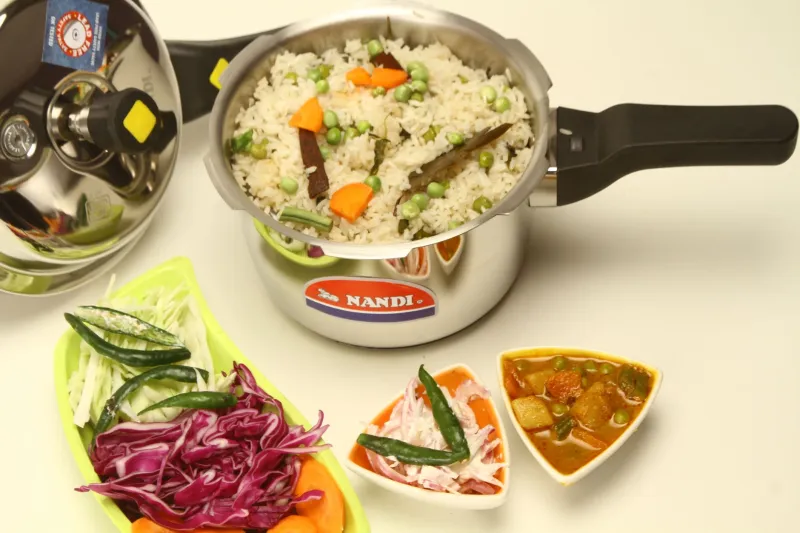
There's a particular kind of kitchen anxiety that comes with a stovetop pressure cooker. The weight jiggles. Steam escapes in short, aggressive bursts. Your grandmother stands nearby, not even looking at it, somehow knowing exactly when to turn the heat down. It's a skill that feels almost mystical — until you realize it's just decades of repetition baked into muscle memory.
Then came the Instant Pot. Set it, seal it, walk away. No hissing. No hovering. No counting whistles.
For a lot of South Asian Americans, the Instant Pot felt like a gift — a way to make dal on a Tuesday without turning it into a whole production. But the more you cook with it, the more a quiet question starts to form: Is this actually the same thing?
The honest answer is no. And that's not necessarily a problem — but it's worth understanding why.
First, Let's Talk About How These Two Things Actually Work
Both devices use pressurized steam to cook food faster than conventional methods. That part is the same. But the way they build and maintain pressure is meaningfully different.
A stovetop pressure cooker responds directly to your burner. You crank the heat to build pressure fast, then pull it back to maintain a steady simmer. That give-and-take between cook and cooker creates small fluctuations in temperature and pressure — tiny, but real. The food inside is in a more dynamic environment.
The Instant Pot, by contrast, is an electric appliance with a built-in heating element and a sealed, controlled environment. It climbs to pressure more slowly, holds it more steadily, and depressurizes on a programmed schedule. It's precise. It's consistent. It's also, in a sense, removed from you entirely.
Neither approach is wrong. But they produce different results, and pretending otherwise is where a lot of frustration starts.
Where the Instant Pot Genuinely Wins
Let's give credit where it's due. The Instant Pot is very good at certain things.
Hands-off cooking. You can set a pot of chana masala, walk away for forty-five minutes, and come back to fully cooked chickpeas without a single moment of supervision. For weeknight cooking in a busy American household, that's not a small thing.
Consistency. Because the Instant Pot controls its own environment, you get reliable results once you've dialed in a recipe. It doesn't matter if you're distracted or if your stove runs hot. The machine doesn't care.
Safety and accessibility. Stovetop pressure cookers, especially older aluminum models, require attention. If you're new to pressure cooking or cooking with kids around, the Instant Pot's sealed lid and automatic pressure release make it a much lower-stakes option.
Beans and legumes from dry. Dry kidney beans, chickpeas, black-eyed peas — the Instant Pot handles these beautifully. Consistent texture, no soaking required if you're in a pinch, and almost zero effort.
Where the Stovetop Cooker Pulls Ahead
Here's where things get more complicated — and more interesting.
Speed. This one surprises people. A stovetop pressure cooker reaches pressure faster because you're feeding it direct, high heat. For a quick dal that needs eight minutes at pressure, the Instant Pot's slower climb can add fifteen to twenty minutes to your actual cook time. The stovetop version is often done before the Instant Pot has even pressurized.
Texture control. The Instant Pot's steady pressure environment is great for even cooking, but it can make it harder to nail specific textures. Masoor dal that should be silky but still have a little body? A stovetop cooker gives you more room to adjust on the fly — fewer whistles for a rougher texture, more for something that's almost dissolved. With the Instant Pot, you're committing to a time and hoping for the best.
The browning factor. Many Instant Pot recipes tell you to use the sauté function before pressure cooking, and it works — sort of. But the heating element doesn't get as hot as a gas burner, which means your onions take longer to caramelize and your whole spices don't bloom quite as aggressively. That foundational layer of flavor, the one that makes the whole dish taste built, is harder to achieve.
That intangible thing. This is the part that's hard to quantify. Stovetop pressure cooking asks something of you. You're listening to it, adjusting to it, making decisions in real time. That engagement changes how you cook — and some people would argue it changes how the food tastes, even if the chemistry doesn't fully back that up.
What This Means for Your Actual Kitchen
The most useful reframe here isn't which one is better — it's which one is better for what.
Use your Instant Pot for:
- Dry beans and legumes that need long cooking times
- Dishes where you genuinely can't babysit the stove
- Recipes with forgiving textures, like fully mashed dal or braised meat that's meant to fall apart
- Batch cooking on weekends when you want to set it and forget it
Reach for the stovetop cooker when:
- You want a quick weeknight dal and speed actually matters
- You're cooking something where texture is precise — think toor dal that should hold its shape, or chana that needs a little bite
- You want maximum flavor development in your base before the lid goes on
- You're replicating a recipe that was written with a stovetop cooker in mind (and yes, the whistle count matters)
A Word About Whistle Counting
If you've ever called your mom for a recipe and she told you "cook it for four whistles," you already know that stovetop pressure cookers have their own language. Each whistle represents a pressure cycle, and the number of whistles gives you a rough sense of how long and how intensely something has cooked.
This system doesn't translate to the Instant Pot — and trying to convert it directly is a recipe for overcooked mush. When adapting stovetop recipes, you're generally better off starting with less time than you think you need and adjusting from there. Chickpeas that take six whistles on the stovetop might only need twenty-five minutes in the Instant Pot. Dal that takes three whistles might be done in eight.
The conversion isn't exact. It's a starting point.
Both Can Live in Your Kitchen
The good news is that this doesn't have to be an either/or situation. A lot of South Asian home cooks in the US keep both — an Instant Pot for the busy weeks and a stovetop cooker for the weekends when there's more time and more intention.
Your grandmother's stovetop cooker wasn't magic. It was a tool she knew deeply, used constantly, and understood intuitively. The Instant Pot can become that too, given time and enough burnt batches of dal to learn from.
The goal isn't to cook the way your grandmother cooked. It's to cook food that tastes like something — and to understand your tools well enough to get there, whatever they happen to be.