Low and Slow vs. Fast and Furious: What Your Onion Technique Is Really Doing to Your Curry
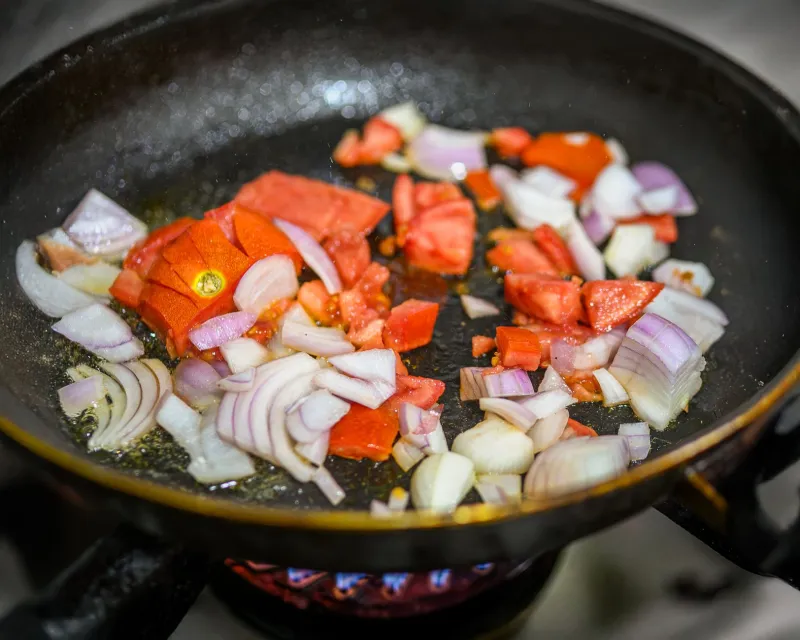
Ask five South Asian home cooks how they handle onions and you'll get five different answers — and probably a few opinions about how everyone else is doing it wrong. Some swear by the long, slow caramelization that turns onions into something almost jammy and sweet. Others cook them just until translucent and move on. A few fry them to crispy and use them as a garnish. And then there's the whole category of people who just add onion powder and keep it moving.
Here's the thing: none of these people are wrong. They're just making different dishes with different flavor goals. The onion isn't just an ingredient in South Asian cooking — it's a foundation. And depending on how you treat it, that foundation can be light and fresh or deep and rich, subtle or unmistakably savory. Understanding what's actually happening when you cook an onion changes how you approach every curry, biryani, and dal you'll ever make.
The Chemistry Behind the Color Change
When you slice an onion and drop it into hot oil, a series of chemical reactions start happening almost immediately. At lower temperatures, the onion releases water and begins to soften. The sugars and amino acids present in the onion cells start to interact as the temperature rises — this is the beginning of what's called the Maillard reaction, the same browning process responsible for the crust on a seared steak or the color on a piece of toast.
Continue cooking past that point and the natural sugars start to caramelize separately, adding sweetness and complexity. The longer you go, the more concentrated and dark the onions become. What starts as a sharp, slightly harsh raw vegetable turns into something completely different — sweet, savory, almost meaty.
The catch is that this process takes time. Real caramelization doesn't happen in five minutes, no matter how high you crank the heat. Rushing it with a higher flame just scorches the outside while leaving the inside undercooked and bitter. This is where a lot of home cooks go wrong — they think the color means the onions are done when the texture and flavor haven't actually developed yet.
The North Indian Approach: Going Dark
In many North Indian, Pakistani, and Bangladeshi cooking traditions, the base of a curry begins with onions cooked to a deep golden-brown — sometimes even darker. This isn't just aesthetic. Those deeply caramelized onions dissolve into the gravy as it cooks, adding body, sweetness, and a savory depth that you can't replicate any other way.
Biryanis often call for birista — fried crispy onions — which are cooked even further, until they're dark and crunchy. Spread on a paper towel, they look almost like they're overdone. But stirred into rice or scattered on top of a korma, they add texture and an intense sweetness that balances the richness of the meat and spices.
If you're making a heavy, restaurant-style curry — a butter chicken, a saag paneer, a nihari — deeply caramelized onions are probably what you're looking for. Budget 20 to 30 minutes, use medium heat, and stir occasionally rather than constantly. Let the onions sit and develop color between stirs rather than agitating them so much that they steam instead of brown.
The South Indian and Coastal Approach: Staying Light
Move south and the onion strategy shifts considerably. Tamil, Malayali, and many coastal cooking traditions use onions differently — often softer, often quicker, sometimes raw. In dishes like sambar or certain fish curries, the onion is there for savory backbone but isn't meant to dominate. The sourness of tamarind, the heat of chilies, and the freshness of curry leaves are doing the heavy lifting.
Shallots, which are smaller and more pungent than yellow onions, are common in South Indian cooking — particularly in Tamil Nadu and Kerala. They behave differently than the large yellow onions most American grocery stores carry. They cook faster, caramelize more easily, and add a slightly different sweetness. If a recipe calls for shallots and you substitute a yellow onion, you'll get something in the right neighborhood but not quite the same.
For these lighter preparations, you're often cooking onions just until translucent and fragrant — maybe eight to ten minutes — before adding other aromatics. The goal isn't depth, it's freshness.
What Happens When You Skip Steps
This is where we have to talk about the shortcuts, because we all take them. Weeknight cooking is real. Nobody has 45 minutes to stand at a stove stirring onions every Tuesday.
But it's worth understanding what you're trading away. Undercooked onions — still white or just barely softened — can leave a sharpness and raw edge in the finished dish that no amount of additional spice will cover. You might notice it as a slightly harsh or vegetal aftertaste. The curry will taste fine but won't have that rounded, cohesive quality that makes you go back for seconds.
A middle path: cook your onions until they're fully soft and just beginning to turn golden — about 12 to 15 minutes over medium heat — before adding garlic, ginger, and spices. You won't get the full depth of a 30-minute caramelization, but you'll avoid the pitfalls of undercooking. It's a reasonable compromise that most weeknight cooks can live with.
The Role of Fat and Pan Choice
The oil or fat you're cooking in also shapes how your onions behave. Ghee runs hotter than vegetable oil and adds its own nutty flavor. Mustard oil — common in Bengali cooking — has a high smoke point and a sharpness that changes the character of the onion base entirely. Coconut oil, used in coastal cooking, adds a subtle sweetness.
Your pan matters too. A wide, heavy-bottomed pan gives onions more surface area to spread out and brown evenly. A narrow pot with high sides causes them to steam in their own moisture rather than caramelize. If you've ever wondered why your onions take forever to brown, the pan is often the culprit.
Your Family's Method Is a Data Point, Not a Rule
Here's where things get personal. The way your mom or grandmother cooked onions wasn't random — it reflected the regional tradition she came from, the time she had available, and the dishes she was making. If she always cooked them dark, it's probably because the curries she grew up making called for that depth. If she moved quickly, her food tradition likely didn't require it.
That method is worth knowing and worth preserving. But it's also worth understanding why it works — because once you understand the why, you can make intentional choices instead of just following inherited habit. You can cook your grandmother's curry exactly the way she did it, and you can also adapt it for a Tuesday when you're tired and short on time, knowing exactly what you're changing and why.