When You Open the Jar, You're Already Home: How Diaspora Cooks Use Spices to Cross Continents
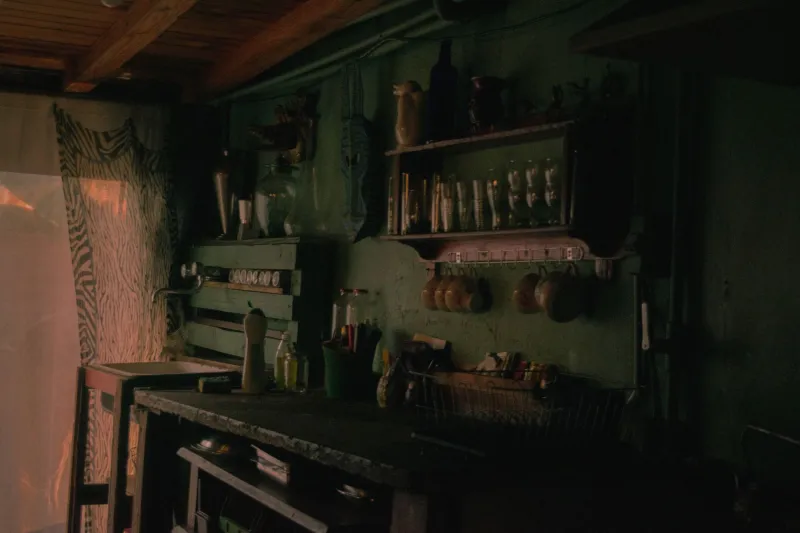
Nandini Krishnaswamy remembers the exact moment she understood what her mother's cooking was actually doing. She was twenty-six, living in a studio apartment in Columbus, Ohio, and she'd just bloomed a pinch of hing — asafoetida — in hot oil for the first time on her own. The smell hit her before the sizzle even finished.
"I just stood there," she says. "I wasn't in Ohio anymore. I was in my grandmother's kitchen in Chennai. I hadn't even eaten anything yet."
That moment — the involuntary collapse of time and geography triggered by a single smell — is something South Asian home cooks across the United States describe with an almost startling consistency. The spice cabinet, it turns out, is not just a practical resource. For the diaspora, it's a form of memory storage.
Smell Is the Shortest Distance Between Two Places
There's real neuroscience behind what Nandini experienced. Olfactory signals travel directly to the limbic system, the part of the brain that governs emotion and long-term memory, without the detour through the thalamus that other senses take. Which is a complicated way of saying: smell is the only sense that bypasses the brain's usual traffic and lands straight in the emotional center.
For South Asian cooks raised in households where the kitchen was always fragrant — where the morning started with tempering and the evening ended with something slow-simmered — that neurological shortcut runs deep. Specific spices become indexed to specific people, places, and moments in a way that photographs and phone calls sometimes can't replicate.
Rohan Mehta, a software engineer living in the Bay Area who grew up in Gujarat, puts it plainly: "My mom used to make a very specific masala for her dal. I've never found it in any recipe. She just knew the proportions. When I try to make it, I'm not really cooking — I'm trying to remember her hands."
The Problem With American Grocery Stores
Recreating those flavor memories in the United States comes with its own set of frustrations. The spices are often there — most major cities now have Indian grocery stores, and even chain supermarkets carry a reasonable South Asian pantry section — but the quality and freshness can vary enormously.
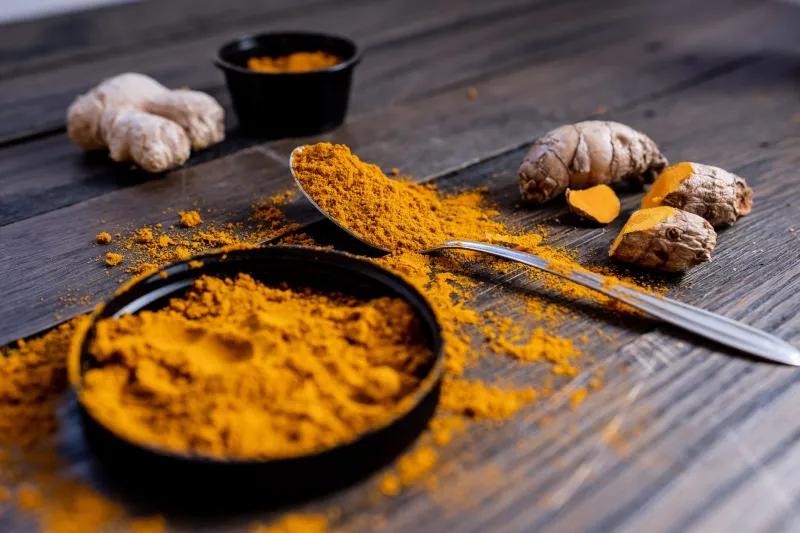
Turmeric bought from a bulk bin at a natural foods store is not the same as turmeric your aunt brought back from Ernakulam in her checked luggage. Coriander powder from a generic spice brand sits differently on your tongue than freshly ground from whole seeds. These are not sentimental exaggerations. They're real flavor differences that home cooks in the diaspora navigate constantly.
Preeti Sondhi, who runs a small supper club in Chicago focused on Punjabi home cooking, says she spent years chasing a taste she couldn't quite catch. "I kept thinking I was doing something wrong. The technique was right, the recipe was right. But it didn't taste like home." The answer, she eventually discovered, was partly the water, partly the age of her spices, and partly something harder to name — the accumulated sensory context of eating that food in a specific place with specific people.
"You can't fully replicate it," she says. "But you can get close enough that it matters."
The Ritual Is the Point
What's interesting is that many diaspora cooks describe the act of cooking itself — not just the eating — as the emotionally significant part. The ritual of measuring, grinding, blooming, and layering spices is a form of repetition that carries its own meaning.
Shabana Qureshi, who grew up in Karachi and now lives in Houston, talks about making nihari on Sunday mornings the way her father used to. "He would wake up early, before everyone else, and start the spices. The whole house would smell like it before any of us were even awake. When I make it now, I wake up early too. I don't have to. I just do."
That kind of inherited behavior — the timing, the sequence, the specific sensory cues — is what food anthropologists sometimes call embodied knowledge. It lives not in written recipes but in muscle memory, in the rhythm of a particular technique, in the instinct to add more fennel or pull back on the cloves.
For second-generation cooks especially, learning to cook South Asian food often means reconstructing that embodied knowledge from the outside in. Watching parents and grandparents cook. Writing things down for the first time. Calling home mid-recipe to ask whether the onions should be this color or that color.
What Gets Passed Down (and What Gets Lost)
Not everything survives the translation. Some spices are genuinely hard to source in the US — good quality dried kokum, fresh curry leaves that haven't gone limp, the specific regional chili varieties that give a dish its particular heat profile. Some techniques get abbreviated out of necessity. Some recipes exist only in the memory of people who are no longer here to ask.
Nandini, the cook from Columbus, lost her grandmother a few years ago. Before she passed, Nandini spent a visit asking her to walk through her recipes out loud while she recorded them on her phone. "She kept saying 'enough' when I asked about quantities. 'You'll know when it's enough.' I have hours of recordings of her saying 'enough.'" She laughs, but there's something real underneath it. "I'm still figuring out what enough means."
That negotiation — between what can be written down and what can only be felt — is one of the defining experiences of cooking across cultures and generations. The spice cabinet holds the ingredients, but it can't hold everything.
Cooking Forward
What it can do, though, is anchor something. Nandini still makes her grandmother's rasam. She's adjusted it for her own taste, substituted a few things she can't find easily in Ohio, and added a step her grandmother never used. It's not identical. But when she blooms the hing, she's still in that kitchen in Chennai for just a moment.
"That's what I want my kids to have," she says. "Not the exact recipe. Just — the feeling that there's a smell that means home, wherever home turns out to be for them."
The spice cabinet as inheritance. As geography. As a way of saying I was here, and so were the people who came before me, and here is what we made together.
That's a lot to ask of a jar of cumin. But South Asian kitchens have always asked a lot of their spices.