One Spice, a Thousand Personalities: What Your Cardamom Is Really Telling You
You've made the same chai recipe a hundred times. Same proportions, same pot, same milk. But every now and then, the whole thing tastes completely different — deeper, more floral, almost perfumed — and you can't figure out why. Chances are, the culprit is sitting in that small jar you barely glanced at before tossing a few pods into the pot.
Cardamom is one of those spices that gets treated like a monolith. A pod is a pod, right? Except no — not even close. The flavor of cardamom is wildly sensitive to where it was grown, when it was picked, and how it was dried and handled before it reached your pantry. Once you understand that, you'll start to see why your grandmother's cardamom — probably sourced from a specific region, maybe even a specific farm — tastes nothing like the bag you grabbed off a grocery store shelf last Tuesday.
Green vs. Black: They're Not Interchangeable, and Pretending They Are Is a Problem
Let's start with the most basic distinction that a lot of home cooks blur: green cardamom and black cardamom are not the same spice in different costumes. They're different species with genuinely different flavor profiles, and they belong in different dishes.
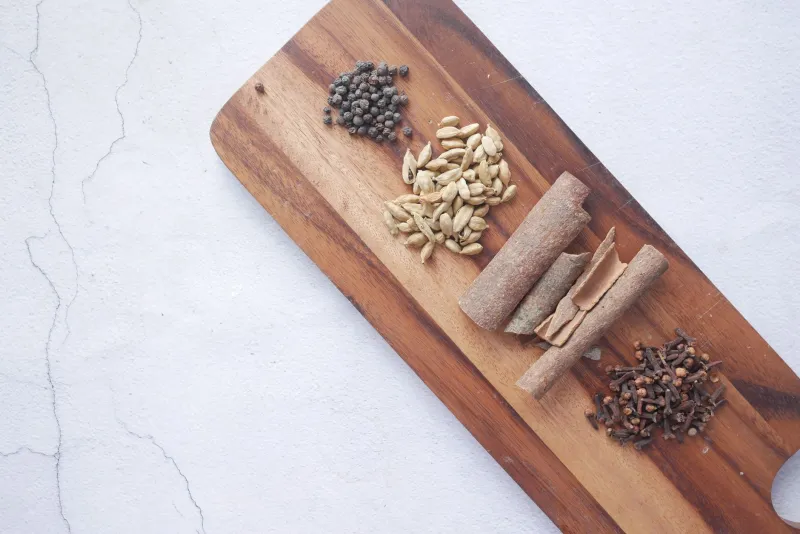
Green cardamom (Elettaria cardamomum) is the one most people picture — small, pale green pods with tiny black seeds inside. It's bright, floral, slightly citrusy, and sweet enough to work in both savory dishes and desserts. This is your chai cardamom, your kheer cardamom, your biryani cardamom.
Black cardamom (Amomum subulatum) is a different creature entirely. The pods are large, dark, wrinkled, and dried over open flames, which gives them a smoky, almost camphor-like quality. There's nothing sweet or delicate about black cardamom — it's earthy and bold, built for long braises, heavy meat dishes, and spice blends like garam masala where it adds a kind of grounding depth. If you've ever wondered what gives a good nihari or slow-cooked lamb its particular backbone, black cardamom is often part of the answer.
Using green where black is called for (or vice versa) won't ruin your dinner, but it will make the dish taste like a slightly off version of itself.
Where Green Cardamom Grows — and Why It Matters
Here's where things get genuinely interesting. Even within green cardamom, the flavor varies significantly based on origin.
Kerala and Karnataka, India have historically been the heartland of green cardamom cultivation. Indian cardamom tends to be intensely aromatic — almost aggressively floral — with a warm, spicy finish. It's what most South Asian cooks grew up with, and it's what gives traditional chai and mithai their characteristic perfume. If your grandmother's cardamom smells like it could fill a room, this is probably what she was using.
Guatemala is now actually the world's largest producer of green cardamom, which surprises a lot of people. Guatemalan cardamom was introduced in the early 20th century and thrives in the country's humid highlands. But here's the thing: Guatemalan cardamom tends to be milder and less complex than Indian varieties. It's not bad — it's just more restrained. A lot of the commodity cardamom that ends up in bulk spice bins and generic grocery store jars is Guatemalan, which partly explains why your store-bought pods might taste flat compared to what you remember from a specialty shop or a relative's kitchen.
Sri Lanka produces a variety known for its lighter, more eucalyptus-forward notes. It's aromatic but in a slightly different direction than Indian cardamom — a little more medicinal, a little less sweet. It shows up in Sri Lankan rice dishes and curries where that brightness works really well.
How Harvest Timing and Processing Change Everything
Growth origin is only part of the story. What happens after harvest matters just as much.
Cardamom pods should be harvested before they fully ripen — ideally while they're still green and firm. Pods that are left on the plant too long start to lose volatile oils, which means less flavor. Once harvested, they need to be dried quickly and carefully. Traditional drying in India often involves curing houses where the pods are gently dried with warm air over several days, preserving the green color and the essential oils inside.
Bleached white cardamom — which you'll sometimes see in South Asian grocery stores — is green cardamom that's been treated to extend shelf life and achieve a uniform appearance. The bleaching process strips out a significant amount of flavor. It looks pretty, but it tastes like a ghost of the real thing. Avoid it unless you have no other choice.
Storage also plays a role. Cardamom starts losing its potency the moment the pod is cracked open. Whole pods hold their flavor far longer than pre-ground cardamom — sometimes years longer if stored in an airtight container away from light and heat. Pre-ground cardamom from a jar that's been sitting open on a spice rack? That's basically cardamom-scented air.
A Simple Tasting Guide for the Curious Cook
You don't need to become a cardamom sommelier to cook better with this spice. But a quick side-by-side comparison can genuinely change how you shop and cook. Here's how to do it.
Buy two or three different sources of green cardamom — a bag from an Indian grocery, a jar from a mainstream grocery chain, and ideally one from a specialty spice shop or online retailer that lists origin. Crack a pod from each and smell it directly. Then crush the seeds between your fingers and smell again.
What you're looking for: vibrancy, complexity, and a lingering quality. Good cardamom should smell like it has layers — floral on top, spicy in the middle, warm at the finish. Flat, faint, or one-note cardamom is telling you it's already past its prime or was never that great to begin with.
For chai and desserts, lean toward Indian-origin cardamom with a strong floral profile. The sweetness and perfume translate directly into kheer, halwa, and the kind of chai that makes people stop mid-sip.
For rice dishes and savory biryanis, either Indian or Sri Lankan varieties work well. You want the aromatics to lift the dish without overpowering the other spices.
For heavy meat dishes and slow braises, that's where black cardamom earns its place. Don't substitute green — the smokiness is structural, not decorative.
The Practical Upshot
None of this means you need to overhaul your pantry or start ordering single-origin spices from specialty importers (though honestly, it's worth trying at least once). What it does mean is that cardamom rewards attention. When a recipe isn't quite landing, the pod you're using might be part of the answer.
Start buying whole pods instead of pre-ground. Look for suppliers that list origin. Store them properly. And the next time your chai tastes exactly the way it's supposed to, you'll know it wasn't luck — it was the cardamom.