One Jar, Zero Nuance: How Curry Powder Became the Shortcut That's Holding Your Cooking Back
Let's be honest about something. If you grew up in an American household without a South Asian grandmother pulling you into the kitchen, there's a good chance your first encounter with "Indian food" came courtesy of a small, dusty tin labeled curry powder. Maybe it was McCormick. Maybe it was something vaguely exotic-looking from the back of a grocery store shelf. Either way, you shook it into a pan, something turned yellow, and you thought: okay, I get it now.
You didn't. And honestly, neither did the tin.
That's not an insult — it's just the reality of what curry powder is and what it was designed to do. Understanding that history is actually the first step toward cooking something that tastes genuinely alive.
The Colonial Shortcut That Stuck Around
Curry powder as we know it in the US is largely a British invention — a 18th-century attempt to bottle the flavor of the Indian subcontinent into something shelf-stable and exportable. The idea was to create a single, standardized blend that could approximate the spiced dishes British colonizers had encountered in India. It was convenience food before convenience food was a concept.
The problem? South Asian cooking was never built around a single spice blend. It was — and still is — built around layering. A Tamil cook in Chennai is working with a completely different spice logic than a Punjabi home cook in Amritsar. A Bangladeshi fish curry and a Gujarati dal share almost no spice overlap. The idea that one powder could represent all of that is a little like saying a single seasoning packet can cover French, Italian, and Spanish cooking. It flattens everything.
And yet, curry powder found its way into American kitchens and stayed there. It's familiar. It's fast. It's available at literally every grocery store in the country. So here we are.
What You're Actually Missing
When you reach for curry powder instead of building your own spice base, you're not just skipping a step — you're skipping the logic of the dish.
South Asian cooking relies heavily on the order in which spices hit heat and fat. Whole cumin seeds crackle in oil before anything else goes in. Ground coriander blooms in a tomato base. Garam masala — which is its own complex topic — often goes in at the end, not the beginning. Each spice has a job, and it performs that job best when it's added at the right moment.
Curry powder collapses all of that into one dump-and-stir moment. You lose the toasty depth you get from frying whole spices in oil. You lose the brightness of freshly ground coriander. You lose the subtle sweetness of cardamom that hasn't been sitting in a blend for six months. You also lose all regional specificity — a curry powder doesn't know if you're making a Kerala fish curry or a North Indian keema. It just makes everything taste vaguely the same.
That sameness is the trap. It's recognizable, it's inoffensive, and it convinces you that you're cooking South Asian food when you're really just cooking curry-flavored food. Those are different things.
Why This Isn't About Being a Purist
Before anyone gets defensive: this isn't about gatekeeping. South Asian cooking has always evolved, adapted, and absorbed outside influences. Fusion is real, shortcuts have their place, and nobody is required to grind their own spices on a stone mortar to earn culinary credibility.
But there's a difference between a conscious shortcut and a default habit that's quietly limiting what you can make. If you're relying on curry powder because it's what you know, that's worth examining — not because it's wrong, but because there's a whole world of flavor on the other side of that habit that's genuinely more satisfying.
How to Start Breaking the Habit (Without Starting Over)
Here's the good news: you don't have to throw out your spice cabinet and start from scratch. You can ease out of the curry powder dependency gradually, and the learning curve is a lot gentler than it sounds.
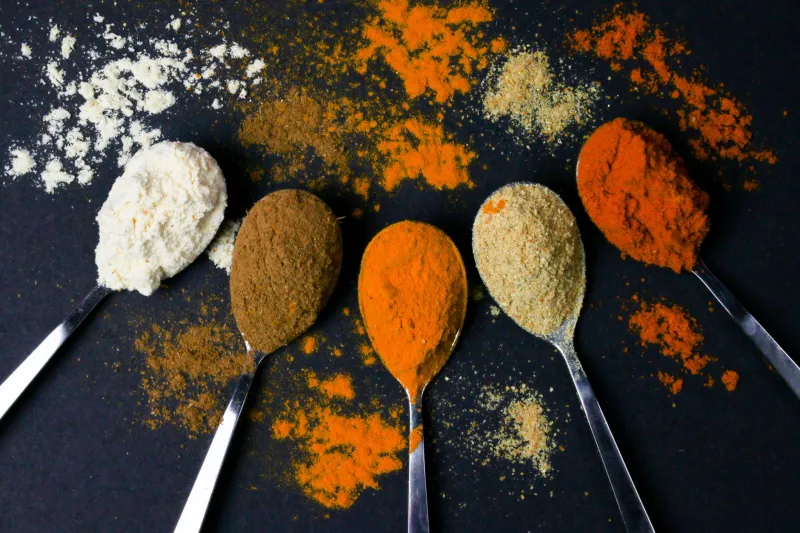
Start with three core spices. Ground cumin, ground coriander, and turmeric are the backbone of a huge number of South Asian dishes. If you can build the habit of reaching for these three separately — rather than as a pre-mixed blend — you're already thinking more like a regional cook. Adjust ratios based on what you're making. More coriander for something bright and vegetal. More cumin for something earthy and meaty.
Add garam masala at the end. This is one of the biggest technique shifts you can make. Garam masala is a finishing spice — it's meant to be added near the end of cooking to preserve its warmth and complexity. If you've been stirring it in at the beginning, you're burning off the most delicate notes. Try adding it in the last two minutes of cooking and notice the difference.
Pick one regional cuisine and go deep. South Asian cooking is not monolithic. Pick a starting point — say, a basic North Indian dal tadka or a simple Bengali mustard fish — and learn the spice logic of that dish specifically. Once you understand why the spices are doing what they're doing in one context, it becomes much easier to read a recipe from a different region and understand the underlying structure.
Buy whole spices for at least one dish. You don't have to go all-in on grinding your own everything. But try making one dish — a simple dal, a raita, a dry vegetable stir-fry — where you start by blooming whole cumin and mustard seeds in hot oil. That moment when the seeds pop and the kitchen fills with that nutty, smoky smell? That's the technique curry powder was designed to skip. Once you've experienced it, you'll understand why it matters.
The Jar Isn't Evil — It's Just Incomplete
Curry powder isn't the enemy. If you're in a pinch, if you're cooking for someone who just wants something familiar, if you're making a quick weeknight meal and you don't have the bandwidth for a three-spice build — fine. Use it. Life is long and dinner is sometimes just dinner.
But if you're genuinely curious about South Asian cooking — if you've eaten something at a restaurant or a friend's house that made you want to understand how — then the jar is a ceiling, not a foundation. Real flavor-building in this cuisine is about relationships between spices, about timing, about understanding what a dish is actually supposed to taste like before you start cooking it.
That's a more interesting kitchen to be in. And the food tastes a lot better, too.