That Dusty Jar of Cumin Isn't Ruined — But It Might Be Lying to You
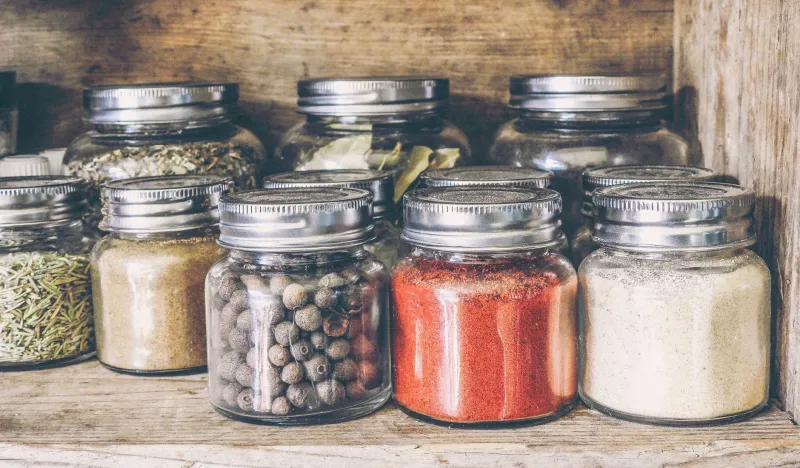
Let's be honest. Most of us have a shelf — or a drawer, or a chaotic cabinet — where spice jars go to be forgotten. There's that tin of amchur you bought for one chaat recipe. The fenugreek seeds you used twice before life got busy. The turmeric that's been there so long the label is fading.
And every time you reach past them, there's a small flicker of guilt. Should I throw these out? Are they even still good?
Here's the thing: the answer is almost never as dramatic as you fear. But it's also not as reassuring as "spices last forever" — a myth that floats around South Asian kitchens with surprising confidence. The truth is somewhere in the middle, and once you understand it, managing your spice shelf gets a lot less stressful.
What "Expired" Actually Means for a Spice
Unlike dairy or meat, dried spices don't spoil in a way that'll make you sick. What they lose is potency — the volatile oils and aromatic compounds that give them flavor, fragrance, and color. When those compounds break down, you're not eating something dangerous. You're just eating something that tastes like very little.
The "best by" date on a spice jar is really a manufacturer's estimate of peak flavor — not an expiration in the traditional sense. McCormick, Badia, and the brands you find at your local Indian grocery are all telling you roughly the same thing: this is when we think it's best. After that? Use your judgment.
And your judgment, it turns out, is pretty well equipped for this.
The Spices That Fade Fast
Not all spices age at the same rate. The ones that lose their punch quickest are generally the ones with the most delicate, complex aromatics.
Ground spices — cumin powder, coriander powder, garam masala, chili powder — typically peak within 1 to 2 years. After that, they don't disappear entirely, but they flatten out. Your curry ends up tasting one-dimensional, and you compensate by adding more, which throws off the balance of the dish.
Dried herbs like curry leaves (dried, not fresh), dried methi (fenugreek leaves), and dried mint are even more fragile. They can start losing their character within 6 to 12 months. If your kasuri methi smells more like dried grass than anything else, it's past its prime.
Spice blends — chaat masala, sambar powder, biryani masala — tend to degrade faster than single-ingredient spices because they're a mix of components that each age differently. These are worth replacing more regularly, maybe every year or so.
The Spices That Age Surprisingly Well
On the other end of the spectrum, whole spices are remarkably resilient. The intact seed or bark or pod acts as a natural container for the essential oils inside.
Whole cumin, coriander seeds, mustard seeds, fennel seeds — these can hold their quality for 3 to 4 years with decent storage. Same goes for whole black peppercorns, cloves, and dried red chilies. A bay leaf tucked into your dal, a few cardamom pods in your chai — these are working spices even years down the line.
Turmeric and paprika are interesting exceptions among ground spices. Because their color compounds (curcumin and carotenoids) are more stable than some other aromatics, they tend to hold up reasonably well for 2 to 3 years — though the flavor does mellow.
Salt doesn't expire. Full stop. Same with whole dried chilis that are properly stored.
The Sniff-and-Rub Test (Your Real Quality Check)
Forget the date on the label for a second. Here's how to actually check what you've got.
Open the jar and take a real sniff — not a quick whiff, but a close, intentional smell. A good spice should hit you immediately. Cumin should smell earthy and slightly smoky. Coriander should be citrusy and warm. Cardamom should stop you in your tracks.
If you're getting something faint and dusty, that's a sign the volatiles have mostly gone.
For whole spices, go one step further: rub a small pinch between your fingers to break the surface and release the oils, then smell again. This is especially telling for cumin seeds, coriander seeds, and whole spices you're thinking about blooming in oil.
For ground spices, you can also rub a bit between your palm and sniff your hand. If you don't smell much within a few seconds, the spice isn't going to do much for your food either.
Storage Fixes That Actually Make a Difference
The biggest enemies of spice longevity are heat, light, and moisture — which is bad news for anyone storing spices on a rack next to the stove, in front of a sunny window, or in a cabinet above the dishwasher.
A few practical changes go a long way:
- Keep spices away from heat sources. A cabinet across the kitchen from the stove is better than one directly above it. The temperature fluctuations near a burner accelerate breakdown.
- Opaque or dark containers beat clear ones when the jar is sitting in any kind of light. If you love the look of glass jars on open shelves, just make sure they're not in direct sunlight.
- Don't shake spices directly over a steaming pot. The moisture that gets into the jar is cumulative and speeds up clumping and degradation. Spoon into your hand or a small bowl first.
- Whole spices in airtight containers last significantly longer than loosely stored ones. A good seal matters.
And if you buy in bulk from a South Asian grocery — which is usually way more economical — consider transferring smaller amounts into everyday jars and keeping the rest sealed in a cool, dark spot.
When to Let Go (Without the Guilt)
Here's permission you didn't know you needed: throwing out a two-year-old jar of ground coriander powder is not wasteful. Cooking with it and wondering why your food tastes flat — that's the actual waste.
A practical reset: once a year, do a quick sniff-and-rub audit of everything on your shelf. Pull out anything that doesn't pass. Ground spice blends and dried herbs are the usual casualties. Whole spices mostly survive.
If you find yourself rarely using something, buy smaller quantities next time rather than the biggest bag. Yes, the per-ounce price is better on the large one. But a half-used bag of ground cardamom that sits for three years isn't a deal — it's just delayed disappointment.
Your spice shelf should be a working collection, not a museum. The goal is flavor, and flavor starts with spices that still have something to say.