Methi Is the Ingredient Your Curry Has Been Missing This Whole Time
There's a flavor you've tasted in a really good saag paneer or a slow-cooked lamb curry — something slightly bitter, faintly herbal, almost medicinal in the best possible way — that you couldn't quite put your finger on. You added more garam masala. You bloomed your spices longer. You even tried a different brand of tomatoes. And still, something was off.
There's a decent chance the missing piece was methi.
Fenugreek leaves — known as methi in Hindi, Urdu, and several other South Asian languages — are one of the most impactful and least discussed ingredients in the whole canon of South Asian cooking. They show up in dishes across India, Pakistan, Bangladesh, and Nepal, doing quiet, essential work that most recipe writers don't bother to explain. For home cooks in the US trying to close the gap between what they make and what they order at a restaurant, methi is often the answer nobody gave them.
What Methi Actually Tastes Like (And Why That's Hard to Describe)
Fenugreek leaves have a flavor profile that doesn't map neatly onto anything else in the Western kitchen. They're bitter, but not aggressively so — more like a gentle edge that keeps sweetness from getting cloying. There's something slightly maple-adjacent in the dried form, which sounds strange until you remember that fenugreek seeds are actually used to make artificial maple flavoring. Fresh methi is more grassy and sharp, with a faint nuttiness. Dried methi — called kasuri methi — is more concentrated, almost smoky, and carries a warmth that lingers.
That combination of bitterness and depth is exactly what makes methi so useful. It cuts through rich, cream-heavy dishes. It adds complexity to simple dals. It makes a basic flatbread taste like it came from somewhere with a real tandoor.
Fresh vs. Dried: They're Not Interchangeable
This is where a lot of home cooks go wrong. Fresh and dried methi behave differently in a dish, and swapping one for the other without adjusting your approach will give you uneven results.
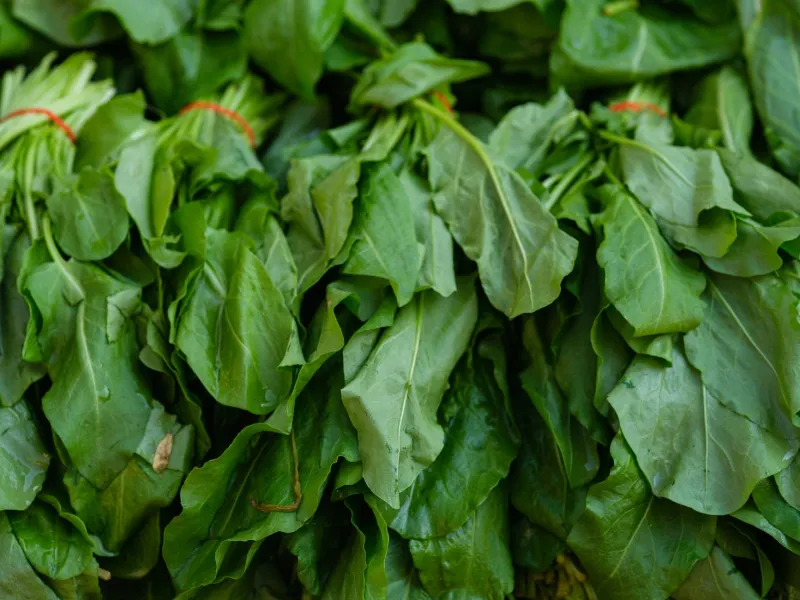
Fresh methi — the actual leaves, sold in bunches — is used early in the cooking process, much like spinach or other leafy greens. It wilts down significantly, so a bunch that looks enormous will reduce to a modest handful once cooked. Fresh methi is the base of dishes like methi chicken, methi aloo, and methi dal, where the leaf itself is a primary ingredient rather than a background note. It's also used in doughs — methi paratha is exactly what it sounds like, and it's one of the more quietly satisfying things you can make on a Sunday morning.
Kasuri methi — the dried, crumbled leaf — is a finishing spice. You add it at the end of cooking, crushing it between your palms to release the oils before scattering it over your dish. This is the move that restaurant kitchens are making that home cooks often skip. A pinch of kasuri methi stirred into a butter chicken or a dal makhani in the final two minutes of cooking does something remarkable. It rounds out the flavor, adds that slightly smoky herbal note, and makes the whole thing taste more finished. It's a small gesture with an outsized effect.
As a general substitution ratio: about one tablespoon of dried kasuri methi for every three to four tablespoons of fresh methi. But keep in mind you're not just replacing quantity — you're also changing when and how the ingredient works in the dish.
Why It's Hard to Find in the US (And What to Do About It)
Fresh methi is genuinely difficult to source if you're not near a South Asian grocery store. Most mainstream supermarkets don't carry it, and when they do, it's often in a sad little plastic clamshell that's already half-wilted. Your best bets are Indian grocery stores — which exist in most mid-sized American cities, often tucked into strip malls in neighborhoods with South Asian immigrant communities — or farmers markets in areas with South Asian populations. Some well-stocked Middle Eastern grocery stores also carry it, since methi is used across several regional cuisines.
Kasuri methi is significantly easier to find. It's available at most Indian grocery stores year-round and increasingly on Amazon, where brands like Everest and MDH are reliably solid. If you're ordering online, get a bigger jar than you think you need — it keeps well in a cool, dry place, and you will use it more than you expect once you understand what it does.
If fresh methi is completely unavailable to you, dried fenugreek leaves are the closest substitute for most cooked applications. For dishes where fresh methi is the star, baby spinach mixed with a small amount of kasuri methi can approximate the texture and some of the flavor, though it won't be quite the same. Arugula, with its bitterness, is another option sometimes suggested — it works better than you'd think in a pinch.
One option worth considering if you cook South Asian food regularly: grow your own. Methi is one of the easiest herbs to grow in a pot on a sunny windowsill or balcony. Seeds are cheap and widely available online, germination is fast, and you can start harvesting leaves within a few weeks. It's a genuinely practical solution if fresh methi is a persistent sourcing headache for you.
The Dishes Where Methi Changes Everything
You don't need to overhaul your entire cooking practice to start using methi. A few strategic entry points will show you quickly what it's capable of.
Methi paratha is the easiest starting point. It's a simple whole wheat flatbread dough with fresh or lightly rehydrated dried methi worked in, seasoned with cumin, chili, and a little ajwain if you have it. The result is a flatbread with a complexity that plain roti just doesn't have — slightly bitter, aromatic, and deeply satisfying with a smear of butter or a bowl of plain yogurt.
Methi chicken is the classic showcase for fresh leaves as a main ingredient. The bitterness of the methi plays against the richness of the chicken and the warmth of the spices in a way that makes the whole dish feel balanced and interesting rather than heavy.
Kasuri methi as a finishing touch is the lowest-effort, highest-impact application. Try it the next time you make any creamy curry — paneer butter masala, dal makhani, even a simple chana masala. Add a teaspoon of crumbled kasuri methi in the last two minutes of cooking and taste the difference. You'll understand immediately why restaurant kitchens keep a jar next to the stove.
Stop Overlooking It
Methi doesn't have the glamour of saffron or the trending status of turmeric. It's not going to show up in a wellness influencer's smoothie anytime soon. But in South Asian cooking, it's a workhorse ingredient that quietly elevates everything around it — adding bitterness where sweetness needs a counterweight, adding aroma where a dish feels flat, adding that ineffable restaurant-quality depth that home cooks spend years chasing.
Get a jar of kasuri methi into your pantry this week. If you can find fresh methi, buy a bunch and make paratha. Start small, pay attention to what it does, and you'll wonder how you cooked without it for this long.