Salt, Oil, and Time: The Real Reasons Your Homemade Achar Falls Flat
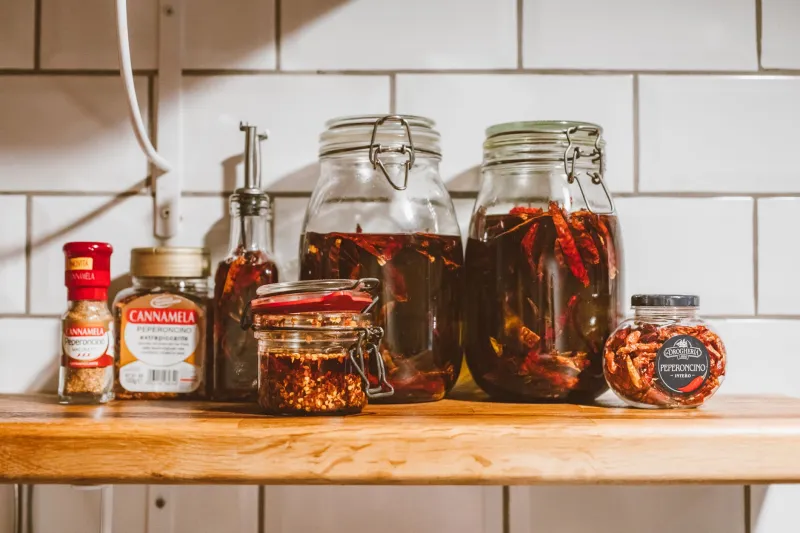
Everybody has a memory attached to achar. Maybe it's your nani's mango pickle, floating in a pool of mustard oil so pungent it practically cleared the room. Maybe it's the tiny ceramic jar your mom kept next to the stove, the one nobody was allowed to touch with a wet spoon. Whatever your version of that memory is, you've probably tried to recreate it — and come up a little short.
Don't feel bad. Homemade achar is one of those things that looks deceptively easy on paper and turns out to be a genuinely nuanced craft. The good news is that the gap between your batch and your grandmother's isn't some mystery locked away in a family vault. It's almost always one of three things: your salt is off, your oil is wrong, or you didn't give it enough time. Let's break all three down.
Why Salt Is Doing a Lot More Than Seasoning
In most cooking, salt is a finishing touch. In achar, it's the whole architecture. Salt draws moisture out of your fruit or vegetable through osmosis, creating a brine that inhibits bad bacterial growth while encouraging the good kind — the lacto-fermentation that gives aged pickles their signature tang and depth.
Get the ratio wrong and everything falls apart. Too little salt and you're inviting mold, especially in the warm, humid conditions achar needs to ferment properly. Too much and you suppress the fermentation entirely, leaving you with something salty and flat rather than complex and bright.
The standard range for most South Asian pickles sits between 10 and 15 percent salt by weight of your main ingredient. That means for every pound of raw mango or cauliflower, you're looking at roughly 1.5 to 2.5 tablespoons of non-iodized salt. Iodized salt is a common mistake — the iodine actively interferes with fermentation and can leave a metallic aftertaste. Use kosher salt or sea salt, and if you're following a recipe from a South Asian cookbook, double-check whether it was written for the finer-grain salts common in the subcontinent, which measure differently by volume than the coarser salts most US cooks use.
The Oil Question (Yes, It Really Matters)
If your achar tastes fine but still doesn't taste right, the oil is probably the culprit. Traditional recipes from North India and Pakistan rely heavily on raw mustard oil, which has a sharp, almost wasabi-like bite when unheated. That pungency mellows over time during fermentation, transforming into something warm and complex that you genuinely cannot replicate with vegetable oil or even olive oil.
Here's the catch: raw mustard oil is sold in the US labeled "for external use only" due to its erucic acid content, though it's widely used in cooking across South Asian communities and is available at most Indian grocery stores. Many home cooks use it anyway — that's a personal call. If you'd rather play it safe, look for cold-pressed mustard oil that's been heat-treated, or use a blend of sesame oil and a small amount of black mustard seeds toasted in a neutral oil to approximate that flavor.
Bangladeshi-style pickles often lean on mustard oil too, but with a heavier hand on panch phoron — the five-spice blend of fenugreek, nigella, cumin, black mustard, and fennel seeds — which changes the aromatic profile significantly. South Indian achar, particularly from Tamil Nadu or Kerala, more commonly uses sesame oil, giving those pickles a nuttier, rounder flavor that's distinctly different from their northern counterparts.
Whatever oil you choose, make sure it completely submerges your ingredients. Oil is the preservation layer. If anything is poking out above the surface, you're asking for trouble.
Fermentation Time: The Part Nobody Wants to Hear
This is where most of us go wrong because we're impatient. You make a batch on Sunday, taste it Monday, decide it's not quite there, and either give up or keep eating it before it has a chance to develop.
Fermentation is a slow, cumulative process. In the first 48 hours, you're mostly just getting salt and spices to penetrate the main ingredient. The real flavor development — the funkiness, the sourness, the complexity — happens between day three and day fourteen, and for some pickles, the best version doesn't show up until week four or six.
Traditional achar-making in India and Pakistan often involved leaving jars in direct sunlight, which gently warms the contents and accelerates fermentation without cooking the ingredients. If you have a sunny windowsill or a south-facing porch, use it. If you don't, a warm spot in your kitchen (near the oven, for example) works fine. Just make sure you're shaking or stirring the jar daily to redistribute the brine and prevent anything from sitting dry at the top.
Regional Recipes Worth Starting With
Aam ka Achar (North Indian Green Mango Pickle): Raw green mango, cut into chunks, salted and dried in the sun for a day, then packed with mustard seeds, fenugreek, turmeric, red chili powder, and mustard oil. Minimum two weeks before it's worth eating. A month is better.
Shorshe Diye Begun Achar (Bengali Mustard Eggplant Pickle): Small Indian eggplants, lightly fried, then marinated in a mustard paste with vinegar, green chili, and panch phoron. This one comes together faster — about five to seven days — and is a good starting point if you're new to the process.
Gajar Mooli ka Achar (Carrot and Radish Pickle): A Punjabi winter staple that uses julienned carrots and daikon radish. The texture stays crunchy, the flavor is bright and tangy, and it's ready in about a week. Great for beginners.
A Few Rules to Pickle By
Always use clean, completely dry jars and utensils. A single drop of water can introduce bacteria that ruins the whole batch. Sterilize your jars the same way you would for canning. Never use a wet spoon to scoop from the jar once it's fermenting.
Start tasting around day five, but don't judge the final product until at least day ten. Keep notes on what you're using and how long you're letting it go — achar-making is iterative, and your second batch will always be better than your first.
And if it still doesn't taste like your grandmother's? That's okay. Her version has thirty years of practice and a jar that's been sitting in the same ceramic pot since before you were born. You're just getting started.