There Is No One Biryani: A Guide to the Regional Versions That'll Make You Rethink Everything
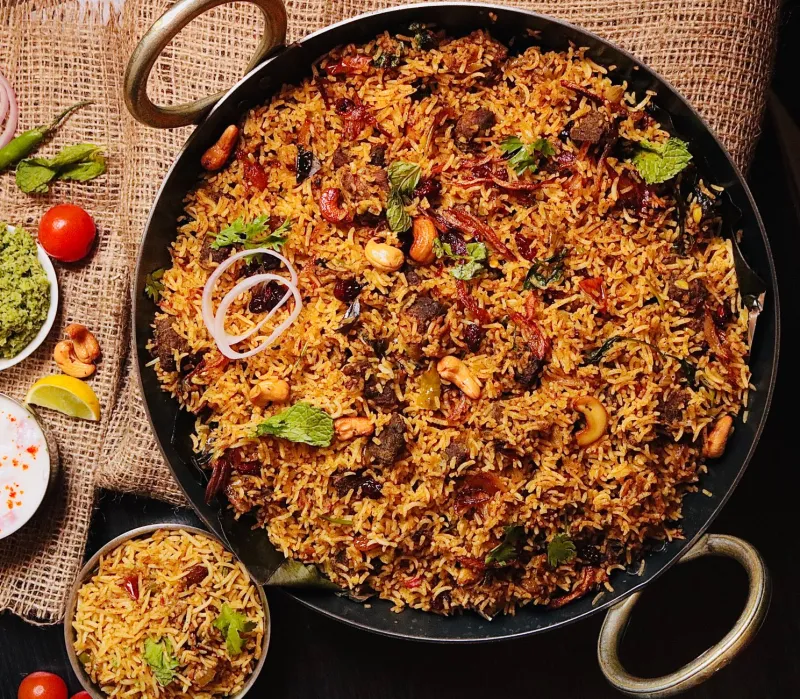
If you've ever made biryani for a group of South Asian friends or family, you already know what happens next. Someone lifts the lid, takes a long sniff, and says — very politely, very diplomatically — "Oh, interesting. We make it a little differently at home."
That sentence is doing a lot of work. What it really means is: This is not the biryani I grew up with, and I have opinions.
Here's the thing: they're not wrong. And neither are you. Biryani is one of those dishes that has been claimed, contested, and lovingly argued over for centuries across India, Pakistan, and Bangladesh. Every region has its version. Every family has its twist. And somehow, all of them are correct.
If you're a home cook in the US trying to figure out where to start — or you've been making one style and wondering what all the fuss is about — this is your cheat sheet.
It's a Framework, Not a Formula
Before we get into the regional deep dive, it helps to understand what biryani actually is at its core. At the most basic level, you're looking at layered or cooked rice combined with a spiced protein or vegetable base. That's it. The rest — the spices, the technique, the garnishes, the ratio of rice to everything else — that's where the regional soul comes in.
The two biggest technical camps are pakki (where the meat is fully cooked before being layered with rice) and kacchi (where raw or partially marinated meat cooks together with the rice under a sealed lid). Both methods can produce something extraordinary. They just get there differently.
Hyderabadi: The One Most Americans Have Tried
If you've ordered biryani at an Indian restaurant in the US, there's a solid chance it was a Hyderabadi-style version, or at least inspired by one. This style comes from the Deccan region of southern India and is famous for its bold, almost aggressive spicing — think whole spices, fried onions (called birista), saffron-infused milk, and a generous hand with chilies.
Hyderabadi biryani is often made kacchi-style, where the marinated meat (usually mutton or chicken) is layered raw with parcooked basmati rice, then slow-cooked in a sealed pot called a dum. The result is intensely aromatic, deeply savory, and just a little smoky from the sealed cooking process. It's dramatic. It's a lot. It's wonderful.
Lucknawi (Awadhi): The Subtle Aristocrat
Head north to Lucknow, and biryani takes on a completely different personality. Awadhi biryani is built on the principles of refinement — fragrant rather than fiery, delicate rather than bold. The spice blend leans into warming aromatics like mace, kewra water, and rose water. Saffron does the heavy lifting on color.
This is typically a pakki-style biryani, meaning the meat is cooked separately in a rich gravy before being layered with rice. The goal is a dish where the rice and meat feel like they were made for each other without either one overpowering the other. If Hyderabadi biryani is a rock concert, Lucknawi is jazz.
Kolkata: The Wildcard With Potatoes
Kolkata biryani has a reputation for being the one that confuses people the first time. That's because it includes potatoes — whole, golden-fried potatoes tucked in with the rice and meat like they belong there (because they do). The story goes that when biryani traveled from Lucknow to Bengal with the exiled Nawab Wajid Ali Shah in the 1800s, the local cooks stretched the meat with potatoes to make it go further. Those potatoes absorbed all that spiced, meaty goodness, and now nobody would dare remove them.
Kolkata biryani is also noticeably lighter on the chili heat and heavier on the floral notes — think nutmeg and rose. It's a style that rewards people who think they don't like spicy food.
Sindhi and Pakistani Styles: Turning Up the Heat
Cross over into Pakistan, and biryani gets louder again. Sindhi biryani — popular across Pakistan and in Pakistani-American households — layers rice with a tangy, spiced meat masala that often includes yogurt, tomatoes, and dried plums for a slightly sour edge. The heat level is real. The color is deep red-orange. The smell will pull people into the kitchen from another room.
Karachi-style biryani is in a similar territory, often even more intensely spiced, sometimes with fried onions and potatoes added in. These styles are bold, unapologetic, and absolutely built for feeding a crowd.
Bangladeshi Biryani: The Mustard Oil Factor
Bangladeshi biryani deserves its own spotlight because it often gets lumped in with Indian or Pakistani styles when it's actually doing something distinct. Kacchi biryani is the gold standard for celebrations in Bangladesh — it's a labor of love, traditionally made with mutton that's been marinated overnight. What sets it apart is the depth of the spice base and, in some regional versions, the use of mustard oil, which adds a pungent, slightly sharp note that you won't find in most other styles.
Bangladeshi biryani is also the one you'll see served at weddings alongside borhani, a spiced yogurt drink that cuts through the richness beautifully.
So Which One Should You Make?
All of them, eventually. But if you're starting from scratch, here's a practical approach: pick the style that matches your heat tolerance and your pantry. If you want bold and fiery, go Hyderabadi or Sindhi. If you want fragrant and nuanced, try Lucknawi. If you want something that'll confuse and delight guests in the best possible way, make Kolkata biryani and don't tell anyone about the potatoes until they've already had seconds.
The most important thing to let go of is the idea that there's a single "authentic" version you need to nail before you've earned the right to experiment. Every family version of biryani started as someone's experiment. The aunties who insist their recipe is the only correct one? Their grandmothers were improvising too.
Biryani is a framework. You bring the tradition, the technique, and the spices. The rest is yours to own.