The 45-Minute Dal and Other Heresies: How Busy South Asian Americans Are Rewriting the Recipe
Meena Krishnamurthy's mother made sambar the way her mother made it—dried tamarind soaked overnight, toor dal simmered for the better part of an hour, the tempering done last in a small iron pan that never got washed with soap. The whole process took most of a Sunday afternoon and filled the apartment with a smell that meant something specific and irreplaceable.
Meena, who lives in Houston and works in healthcare, makes sambar on Tuesday nights in an Instant Pot. It takes about 40 minutes start to finish, including the time she spends unloading the dishwasher while the pressure builds.
"Is it exactly the same? No," she says. "Does it taste like home? Mostly. Is my family eating a real meal instead of DoorDash? Yes."
This is the negotiation happening in South Asian American kitchens all over the country right now—not a rejection of tradition, exactly, but a pragmatic renegotiation with it. And it's producing some genuinely interesting cooking.
The Pressure Cooker Was Always There
Here's something worth noting before we get too romantic about the idea of slow cooking as the default: pressure cookers have been a staple in South Asian kitchens for generations. The stovetop kind—Prestige, Hawkins, and their relatives—are as standard in an Indian kitchen as a cast iron skillet in an American one. The Instant Pot didn't introduce the concept of pressure cooking to South Asian cooking. It just made it easier to use in an American kitchen where stovetop pressure cookers feel unfamiliar and slightly alarming to anyone who didn't grow up with them.
What the Instant Pot actually changed is the set-it-and-forget-it factor. You can walk away. You can do other things. You can, if necessary, start a dal before you leave for school pickup and come home to something that's been sitting on warm for an hour and is somehow better for it.
What Actually Works in an Instant Pot
Not everything translates equally well to pressure cooking, and being honest about that matters more than selling the technique as a universal solution.
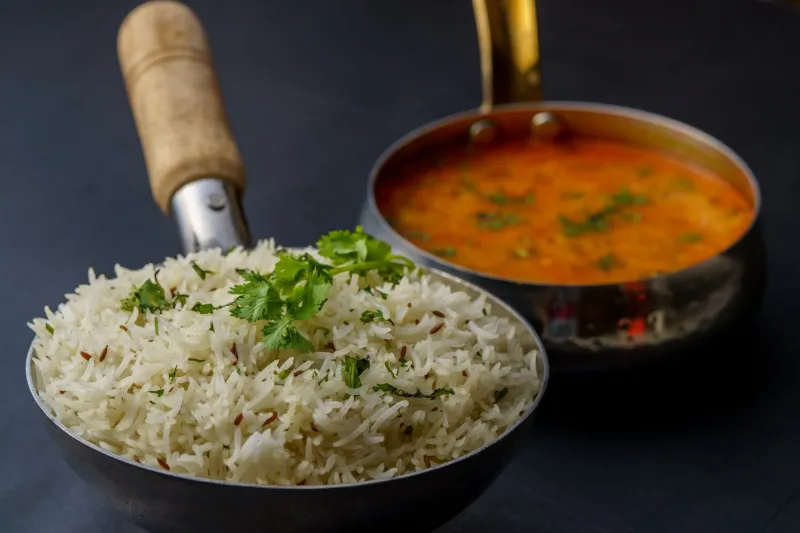
Dal in almost any form is a genuine Instant Pot success story. Toor, chana, masoor, moong—all of them pressure cook beautifully, often in 15–25 minutes at high pressure depending on the variety. The texture is slightly different from long-simmered stovetop dal (a little softer, a little more uniform), but the flavor holds up well, especially if you're doing a proper tadka afterward. The tadka—that final bloom of mustard seeds, curry leaves, and dried chilies in hot oil—is non-negotiable, by the way. Do not skip it in the name of efficiency.
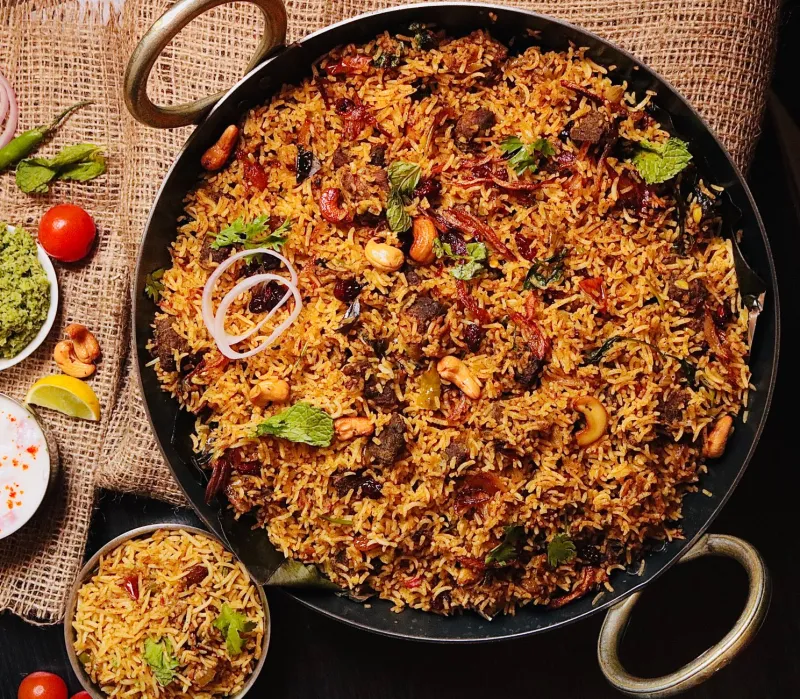
Biryani is more complicated. One-pot Instant Pot biryani recipes are everywhere, and some of them are quite good. But if you're someone who cares about the layered texture of a proper dum biryani—the way the rice grains stay distinct, the way the caramelized onions and saffron create pockets of flavor—the pressure cooker version will feel like a compromise. It's a tasty compromise, but a compromise nonetheless. For weeknights, totally fine. For a Sunday gathering where people will have opinions, maybe not.
Chole and rajma are arguably better in a pressure cooker than on the stovetop, particularly if you're starting from dried chickpeas rather than canned. The pressure dramatically cuts the cooking time while keeping the beans intact and creamy inside. Add a proper masala base first using the sauté function, then pressure cook everything together, and you get something genuinely good.
Saag and other leafy greens are a mixed bag. Spinach and mustard greens cook so fast that the pressure cooker doesn't offer a huge time advantage, and there's a risk of losing the bright color if you overdo it. A simple sauté in a wide pan often works better and faster.
The Deeper Adaptation: Mise en Place, South Asian Style
Beyond specific appliances, the cooks navigating this most successfully tend to approach their South Asian cooking the way professional kitchens approach everything: with prep work done ahead.
This means making masala bases on the weekend—that long-cooked foundation of onion, ginger, garlic, and tomato that underlies so many curries—and freezing them in ice cube trays or small containers. Pull out three or four cubes, thaw them in a pan, add your protein or vegetable and some water, and you have a curry that tastes like it took an hour in about 20 minutes.
It means keeping frozen ginger-garlic paste in the freezer rather than mincing fresh every time (most Indian grocery stores sell this ready-made, and it's fine). It means toasting and grinding a big batch of garam masala once a month instead of every time you cook.
None of this is cheating. It's just mise en place applied to a cuisine that doesn't always talk about it explicitly.
What Gets Lost, Honestly
There's a version of this conversation that's purely celebratory—look how adaptable our food is, look how we've made it fit modern life. And that's real. But it's worth sitting with what doesn't survive the speedup.
The smell of a dal that's been simmering for two hours is different from a pressure-cooked one. Not better or worse in any objective sense, but different in the way that matters to memory. The slow cook is also a kind of attention—you're in the kitchen, you're tasting, you're adjusting. The Instant Pot removes you from that process, and something subtle goes with it.
Second-generation cooks, in particular, sometimes describe a feeling of mild disconnection—they can produce the dish, but they didn't learn it the way their parents did, through proximity and repetition over years. The recipe is preserved but the transmission changed.
This isn't an argument against modern methods. It's just an honest accounting.
The Both/And Kitchen
What the most thoughtful South Asian American home cooks seem to be landing on is a both/and approach rather than an either/or one. Weeknight dal in the Instant Pot, yes. Sunday afternoon nihari that simmers for three hours when there's time and reason, also yes. The slow version for occasions when the process is part of the point; the fast version when dinner just needs to happen.
The food doesn't have to carry the full weight of cultural preservation every single night. Sometimes it just has to be good and on the table.
That's not a betrayal of anything. That's just cooking.