Stop Letting Your Spices Go to Waste: How to Build a South Asian Pantry You'll Actually Cook From
Let's be honest about something. If you've ever gotten excited about making a dal or a curry from scratch, there's a good chance your first move was a slightly chaotic trip to a grocery store where you grabbed every spice that sounded familiar, spent way more than you planned, and then made the recipe once before that collection quietly gathered dust in a cabinet.
You're not alone. South Asian cooking has a reputation for being spice-intensive, and while that reputation isn't entirely wrong, it's also a little misleading. The real issue isn't the number of spices — it's not knowing which ones actually matter, which ones overlap, and which ones you can skip until you're ready for them.
Here's a more practical approach.
The Mistake Everyone Makes First
Buying whole spices before you're ready for them. Whole cumin seeds, whole cardamom pods, whole coriander — they're all over South Asian recipes, and they genuinely do taste better than pre-ground versions. But they also require a grinder, a dry pan for toasting, and a bit of technique that can feel like extra homework when you're just trying to get dinner on the table.
If you're new to this cuisine, start with ground spices and upgrade to whole versions as you get comfortable. Ground spices aren't a compromise — they're practical. Just replace them more frequently, because ground spices lose potency faster than whole ones. A good rule of thumb: if a ground spice has been sitting in your cabinet for more than a year, it's probably contributing more color than flavor.
The Non-Negotiables: Your Tier-One Spices
These are the spices that show up in the widest range of South Asian dishes across regional cuisines. If you only buy one category, make it this one.
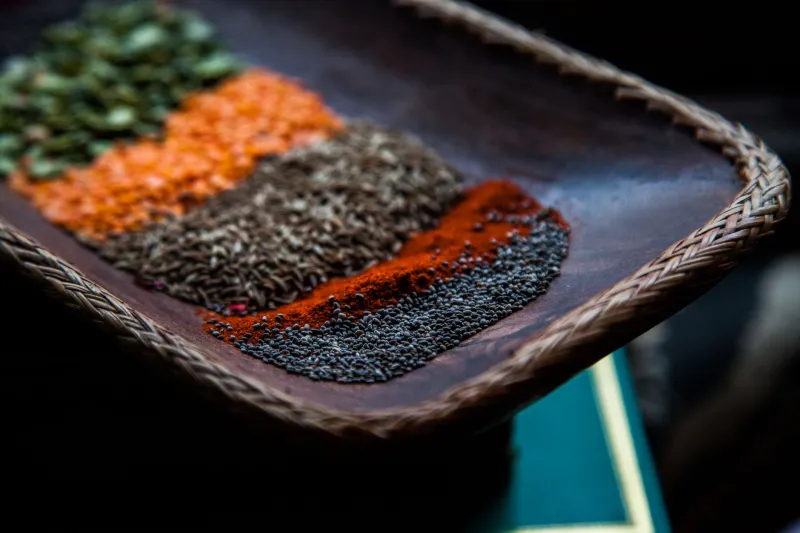
Cumin (ground and/or seeds): The backbone of countless dishes. Ground cumin is your everyday workhorse. Whole seeds are great for tempering in oil — that technique where you let spices sizzle briefly in fat before adding other ingredients.
Coriander (ground): Earthy, citrusy, and surprisingly versatile. It pairs with almost everything and is the base of most spice blends.
Turmeric: A little goes a long way. It adds color, a subtle bitterness, and genuine anti-inflammatory properties that South Asian cooking has leaned on for centuries. Don't skip it.
Cayenne or red chili powder: Not the same as American chili powder, which contains other spices. Look for pure red chili powder at an Indian grocery store, or use cayenne as a straightforward substitute.
Garam masala: This is a pre-blended spice mix, and every brand — and every household — has its own version. It typically includes cinnamon, cloves, cardamom, black pepper, and cumin. Use it as a finishing spice, added near the end of cooking to brighten a dish.
Mustard seeds: Essential for South Indian cooking. They pop and crackle in hot oil and add a nutty, slightly pungent note that's hard to replicate any other way.
Tier Two: Worth Having Once You're Cooking Regularly
Once you've got the basics down and you're making South Asian food a couple times a month, these additions start making real sense.
Whole cardamom pods (green): Used in biryanis, chai, and desserts. They're also easy to use — just bruise them lightly and add to simmering dishes. Remove before serving.
Cinnamon sticks: Different from the ground cinnamon in your baking cabinet in terms of how they're used — simmered whole in rice and curries rather than sprinkled in.
Cloves: Pungent and warm. A few go a long way.
Kashmiri chili powder: This one is worth tracking down specifically. It gives dishes a deep red color without intense heat — a quality that regular cayenne can't replicate. Look for it at South Asian grocery stores or on Amazon.
Asafoetida (hing): Smells alarming in the jar, transforms completely when it hits hot oil. It adds a savory, onion-garlic depth that's especially important in dishes from communities that don't use alliums. Start with a tiny pinch.
Where to Actually Buy This Stuff in the US
Your standard grocery store — whether that's Kroger, Whole Foods, or a regional chain — will carry the basics: cumin, coriander, turmeric, and garam masala. Quality varies, but it works as a starting point.
For the more specific items and significantly better prices, South Asian grocery stores are the move. Stores like Patel Brothers (which has locations across the country), local Indian or Pakistani markets, or any grocery store in a neighborhood with a large South Asian community will have a much wider selection at a fraction of the price. Buying spices in larger quantities from these stores is almost always more economical, and the turnover tends to mean fresher stock.
Online, Amazon and specialty retailers like iShopIndian or Diaspora Co. (which sources single-origin spices directly and is genuinely excellent) give you access to things that might not be available locally.
Storage: The Part Most People Ignore
Spices are enemies of light, heat, and moisture — which makes the classic spice rack mounted next to the stove one of the worst places to keep them. A cool, dark cabinet or drawer is better. Airtight containers are better than the jars many spices come in.
Label everything with the purchase date. It sounds fussy, but it takes ten seconds and saves you from cooking with effectively flavorless powder six months from now.
If you buy whole spices in bulk, store them in the freezer in sealed bags. They keep for significantly longer without losing potency.
A Starter Checklist for Your First South Asian Pantry Run
Here's a simple shopping list that will get you through a wide range of recipes without overwhelming you:
- Ground cumin
- Ground coriander
- Turmeric
- Red chili powder (Indian variety) or cayenne
- Garam masala
- Mustard seeds
- Bay leaves
- Cardamom (ground, for now)
- Cinnamon (sticks or ground)
- Black pepper
Beyond spices, stock your pantry with: canned or dried lentils (masoor dal and chana dal are great starting points), basmati rice, canned tomatoes, coconut milk, and a good neutral oil. Ghee is worth picking up too — it's widely available now at Trader Joe's, Costco, and most grocery stores.
The Bigger Picture
Building a South Asian pantry isn't a one-time shopping event. It's a gradual process of adding things as you need them, replacing what runs out, and getting more selective about what earns shelf space. Start with the essentials, cook from them consistently, and let your pantry grow naturally from there.
The goal isn't a perfectly stocked spice collection. It's a kitchen you actually cook in.